An unsatisfactory Electrical Installation Condition Report is more common than most landlords expect, thousands of London properties fail their EICR every year. The result itself isn’t the problem. What happens next is what determines whether you stay compliant, insured, and out of enforcement territory.
Electrical remedial work is the repair process that takes a failed installation from “unsatisfactory” back to safe and legally compliant. We carry this out for landlords, managing agents, homeowners, and businesses across London, diagnosing exactly what needs fixing, completing the work to BS 7671 standards, retesting it, and issuing the paperwork that proves compliance.
Our approach is straightforward: identify the defects, fix them properly, verify the fix, and hand you certification you can show to tenants, agents, or the local authority without a second thought.
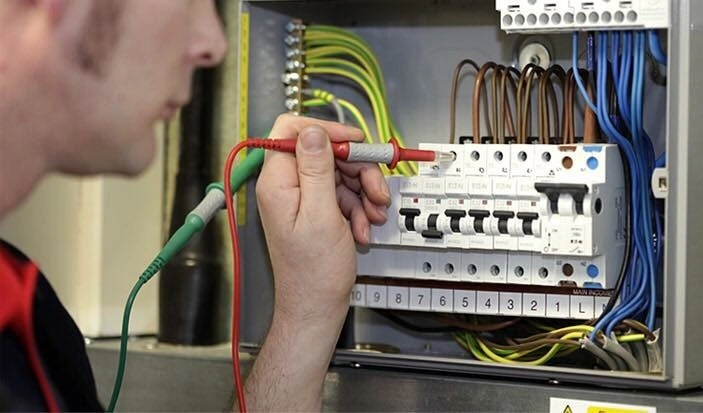
An EICR becomes unsatisfactory when the inspector records a C1, C2, or FI code, findings that indicate danger, potential danger, or an issue requiring further investigation. Electrical remedial works are the specific repairs needed to clear those codes.
Depending on the report, this might mean correcting an earthing fault, replacing a damaged socket, or upgrading a consumer unit. It isn’t cosmetic work, it’s the difference between an installation that’s safe to use and one that legally isn’t.
The Real Risks of Delaying Repairs: Electrical faults aren’t a theoretical risk. According to the UK Home Office, electrical faults are behind thousands of accidental house fires in the UK each year, loose connections, overloaded circuits, and inadequate protection are among the most common causes.
Leaving a C1 or C2 defect unresolved puts tenants and occupants at genuine risk of shock or fire. It’s also a breach of the Electrical Safety Standards in the Private Rented Sector Regulations, which places a legal duty on landlords to keep electrical installations safe throughout a tenancy. Non-compliance can lead to enforcement action and fines of up to £40,000 per breach.
There’s an insurance angle too: if a known, unaddressed defect later contributes to a fire or injury claim, an insurer may question whether reasonable steps were taken, and that can affect the outcome of a claim.
Who Is Responsible for Fixing EICR Issues: Responsibility sits with whoever controls the electrical installation. For rented property, that’s the landlord, even where a managing agent coordinates the work day-to-day, the legal duty stays with the landlord. In a workplace, health and safety law places that duty on the person in control of the business premises.
If it’s unclear who’s responsible in your situation, it’s worth confirming early rather than assuming someone else has it covered, the consequences of a missed obligation fall on the duty holder, not the assumption.
We offer professional EICR testing for offices and commercial sites, ensuring your business stays fully compliant with minimal disruption.
We deliver quick, accurate electrical fault-finding to identify issues early and prevent costly repairs or system failures.
We provide fast, certified electrical inspections for homes and rentals, ensuring complete safety and compliance at competitive rates.
We provide modern, compliant fuse box upgrades that enhance safety, reduce tripping, and meet all 18th-Edition regulations.
We provide fast, efficient PAT testing with instant digital reports to keep your appliances, staff, and tenants fully protected.
A satisfactory EICR has no C1, C2, or FI codes. C3 observations can still appear, these are recommendations, not failures, and don’t affect the report’s outcome.
An unsatisfactory result means genuine defects were identified. Once those defects are repaired and retested, compliance is restored and evidenced with the appropriate certification.
These codes cause more confusion than almost anything else in the EICR process. In plain terms:
Understanding this distinction stops landlords over-spending on work that isn’t legally required, and helps prioritise what genuinely needs attention first.
Only C1 and C2 codes need to be resolved to clear an unsatisfactory result. FI items need to be investigated, and fixed if that investigation confirms a defect.
C3 items are optional. They relate to improvements beyond the current safety standard, not to compliance itself. We always separate required work from recommended work in our quotes, so the decision stays with you.
For private rented property in England, remedial work following an unsatisfactory EICR should typically be completed within 28 days, or sooner if the report specifies an earlier deadline.
In practice, that’s a tight window. Booking a survey promptly and confirming scope early avoids the last-minute scramble to arrange tenant access before the deadline passes.
Consumer Unit and Protective Device Upgrades (RCD/RCBO): Older fuse boards frequently lack modern RCD protection, a key safeguard against electric shock. Upgrading the consumer unit is one of the most common remedial actions, particularly in properties with ageing installations or insufficient circuit protection.
Earthing and Bonding Corrections: Correct earthing and bonding ensures fault current has a safe path to ground. Missing or undersized bonding conductors are a frequent cause of C2 codes. We test continuity, check bonding to gas and water services, and upgrade conductors where needed.
Socket, Switch and Lighting Safety Repairs: Damaged accessories, loose faceplates, signs of overheating, or exposed live parts commonly generate C1 or C2 codes. These repairs are usually quick, but they still require correct testing and sign-off to confirm the fix.
Overheating, Loose Connections and Circuit Fault Rectification: Overheating often traces back to loose terminations inside consumer units or junction boxes, a fault that’s rarely visible without testing. We isolate the affected circuit, inspect the termination, re-terminate or replace as required, then verify the repair.
Wiring Repairs and Partial Rewires: Older properties in particular can have wiring that’s degraded or no longer fit for purpose. That doesn’t automatically mean a full rewire, we assess the actual condition and only recommend partial rewiring where it’s genuinely necessary.
Further Investigation (FI): Fault-Finding and Confirmed Solutions: An FI code means the inspector found something inconclusive, a result that suggests a possible fault without confirming it. We carry out targeted fault-finding to identify the root cause before proposing any repair, so you’re not paying to fix a problem that hasn’t been confirmed.
Report Review and Triage: We start by reviewing your EICR in detail. Reports vary widely in clarity, so we identify what’s genuinely urgent and what needs further investigation, triage that prevents both overreaction and missed risks.
Site Survey When a Report Isn’t Enough: Some reports don’t contain enough detail to price accurately from the paperwork alone. Where that’s the case, we carry out a site survey, checking access, confirming circuit layouts, and validating that the proposed scope is actually deliverable, so costs don’t shift later.
Safe Repairs Using Compliant Materials and Methods: All work is carried out to BS 7671, the UK wiring regulations, using compliant materials and correct isolation, testing, and verification procedures throughout.
Verification and Re-Testing After Works: Every repaired circuit is retested to confirm the original defect has genuinely been resolved. Depending on the fault, this can include insulation resistance, earth fault loop impedance, and RCD testing. Verification isn’t optional, it’s the only way to prove the installation is actually safe.
Clear Handover: Once work is complete, you receive the correct certificate and a clear written summary showing exactly which defects were fixed and how compliance has been restored.
Minor Works Certificate vs Electrical Installation Certificate: A Minor Electrical Installation Works Certificate typically covers small-scale repairs or alterations. An Electrical Installation Certificate applies to larger works, such as a consumer unit replacement. We’ll confirm which applies to your job and why.
Part P Certification for Notifiable Domestic Works: Some domestic electrical work is notifiable under Building Regulations Part P. Where that applies, we submit the notification through our registration body so you receive the correct confirmation.
Evidence and Paperwork for Landlords and Agents: Landlords need to be able to evidence remedial work to tenants and, if requested, to the local authority. We provide documentation that clearly links each completed repair back to the original EICR observation it resolves.
What to Provide to Tenants, and When: Once remedial work is complete, landlords typically need to give tenants written confirmation and any relevant certificate within a set timeframe. We tell you exactly what to issue and help you stay on top of the deadline.
Access Planning and Notice Periods: Access is usually the hardest part of remedial work in occupied property. We work to structured appointment slots and give tenants realistic notice, which cuts down on missed visits and rescheduling.
Minimising Disruption: Where possible, we keep power outages short and scheduled, work tidily, and stay mindful of occupants’ space throughout the visit.
Communicating with Managing Agents, Tenants and Site Contacts: Agents need reliable updates. We confirm appointments, flag progress where relevant, and respond to questions promptly rather than leaving people chasing.
Multiple Units and Large Installations: For blocks, HMOs, and larger portfolios, we phase the work sensibly, minimising disruption across units while keeping every stage properly documented.
What Affects Cost: Cost depends on the type of defect, the number of circuits involved, the condition of the wider installation, and site access. Re-tightening a loose connection is a different job to a full consumer unit upgrade, a clearly defined scope is what makes pricing accurate.
Remote Quote vs Survey: A detailed EICR sometimes gives us enough information to provide an indicative quote remotely. Where the report is unclear, particularly with FI codes, a site visit is the more reliable route. We’ll always tell you which situation applies rather than guessing.
Urgent Remedials and Priority Scheduling: C1 defects are treated as priority. Where there’s an immediate risk, we recommend isolating the affected circuit and arrange the earliest possible appointment.
How We Quote: Quotes set out exactly what’s included, with required work and optional C3 improvements kept clearly separate. The decision on optional items is always yours.
Competent, compliance-focused work, not quick fixes. We work to a standard that holds up under future inspection, not just to clear the current report.
Honest advice on C3 improvements. We’ll flag where an upgrade genuinely improves safety, and we’ll be equally clear when it isn’t legally required.
Reliable communication throughout. From the first call to final certification, you’ll know what’s happening and why.
Built for landlords, managing agents and commercial duty holders. We understand the pressure of compliance deadlines, tenant access, and regulatory scrutiny across London.
Yes. We can review a report from another contractor and carry out the necessary work, though we'll confirm the scope through the paperwork or a short survey first.
Sometimes, if the report is detailed and unambiguous, we can provide an indicative quote remotely. Where information is missing, a survey is usually the more accurate route.
No. C3 items are recommendations. They don't make a report unsatisfactory and aren't required for compliance.
Usually a Minor Works Certificate or an Electrical Installation Certificate, depending on the scale of the work. A full new EICR is only needed in specific circumstances.
It depends on the scope. Minor repairs can be completed in a few hours; larger upgrades, such as a consumer unit replacement, may take a full day or longer.
As a landlord, you risk breaching the Electrical Safety Standards in the Private Rented Sector Regulations, alongside the underlying safety risk to occupants.
In most cases, yes. There may be short, planned power interruptions, but full vacancy usually isn't required.
It means further investigation is needed. We carry out targeted testing to identify the specific fault before proposing a fix.


© 2026 Safety Spectrum London – All Rights Reserved. Company Reg No.16678881
Live Chat