
Fire Door Survey London for Landlords, HMOs, Flats and Commercial Properties
Professional Fire Door Surveys & Fire Door Inspections across London Fire Door Surveyors London-wide for landlords, property managers, HMOs, blocks of flats, offices, retail units, schools, health care premises & commercial buildings. We use our inspections to help property owners identify safety issues early, understand their legal responsibilities and maintain compliance with current UK fire safety regulations.
We inspect internal fire doors, communal fire doors, FD30 and FD30S fire doors, entrance doors, glazed fire doors, composite fire doors and other fire rated door sets on residential and commercial properties across London and the M25.
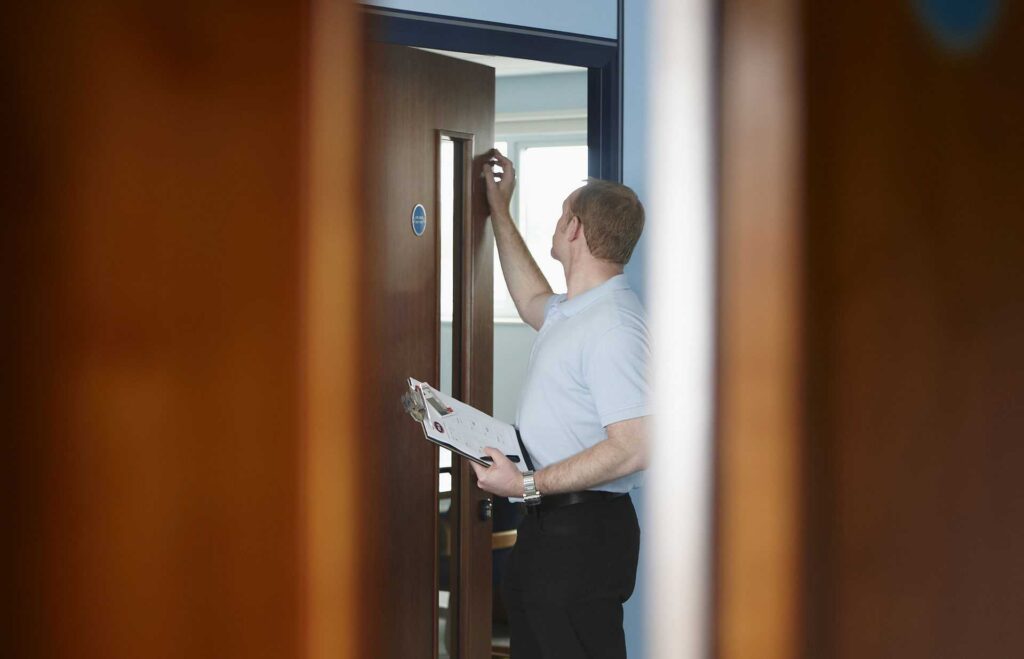
We carry out extensive checks of the entire fire door set, including the door leaf, frame, hinges, gaps, smoke seals, intumescent strips, door closers, glazing, locks, handles and ironmongery. We then provide a clear fire door inspection report following the inspection detailing any defects, compliance issues and practical recommendations for remedial works or replacement where necessary.
Whether you own a small residential property or a large commercial building, Safety Spectrum London offers practical and professional fire door compliance support that will suit your property.
What Is a Fire Door Survey?
Understanding the Purpose of Fire Door Inspections:A fire door survey is an in-depth check to see if fire doors are capable of working properly in the event of a fire.
Why Fire Doors Are Critical for Life Safety and Smoke Protection:Many people assume a fire door is simply a heavier internal door. In reality, a compliant fire door is a carefully tested assembly made up of multiple fire-rated components.
During a fire, properly functioning fire doors can:
- Slow the spread of flames
- Reduce smoke movement
- Protect stairwells and corridors
- Help maintain protected escape routes
- Reduce property damage
- Give firefighters safer access
Smoke is one of the biggest dangers in a fire. That is why smoke seals and door closers are so important to the performance of a fire door.
A malfunctioning door or damaged seals can lead to smoke spreading rapidly throughout a building.
The Difference Between Fire Door Surveys, Fire Door Checks and Fire Door Maintenance
Many property owners hear terms like fire door survey, fire door inspection, fire door check and fire door maintenance used interchangeably. They are related, but they are not always the same. A fire door survey or inspection is a systematic assessment by a qualified professional of the condition and compliance of fire doors.
Routine fire door checks are typically simple visual checks performed by building management or maintenance personnel. Fire door maintenance is the routine servicing, repairs, adjustments and remedial works necessary to keep the doors compliant over time. All three are crucial parts of a building’s total fire safety strategy.
How Fire Doors Help Protect Escape Routes in Residential and Commercial Buildings
In residential blocks and commercial premises, protected escape routes are essential.
If smoke and fire spread into corridors or stairwells too quickly, occupants may lose safe access to exits. Fire doors help prevent this by compartmentalising areas of the building.
For example, flat entrance doors to apartment blocks are designed to stop fire spreading from one flat to the communal corridors. Internal fire doors in HMOs also help limit the spread of smoke between bedrooms, kitchens and shared escape routes.
Evacuation is much more dangerous due to the lack of effective fire doors.
Why Regular Fire Door Inspections Matter for Legal Compliance
Fire doors should not simply be installed and forgotten about.
Changes in occupancy, repeated use, refurbishment works, damage, and poor repairs can all affect compliance over time.
Regular inspections help property owners:
- Identify defects early
- Maintain compliance records
- Reduce long-term repair costs
- Support insurance requirements
- Demonstrate due diligence
- Protect occupants and visitors
Many landlords and businesses now see regular inspections as an important part of responsible property management.
What Is a Fire Door Survey?
Understanding the Purpose of Fire Door Inspections:A fire door survey is an in-depth check to see if fire doors are capable of working properly in the event of a fire.
Why Fire Doors Are Critical for Life Safety and Smoke Protection:Many people assume a fire door is simply a heavier internal door. In reality, a compliant fire door is a carefully tested assembly made up of multiple fire-rated components.
During a fire, properly functioning fire doors can:
- Slow the spread of flames
- Reduce smoke movement
- Protect stairwells and corridors
- Help maintain protected escape routes
- Reduce property damage
- Give firefighters safer access
Smoke is one of the biggest dangers in a fire. That is why smoke seals and door closers are so important to the performance of a fire door.
A malfunctioning door or damaged seals can lead to smoke spreading rapidly throughout a building.

The Difference Between Fire Door Surveys, Fire Door Checks and Fire Door Maintenance
Many property owners hear terms like Fire Door Survey London, fire door inspection, fire door check and fire door maintenance used interchangeably. They are related, but they are not always the same. A fire door survey or inspection is a systematic assessment by a qualified professional of the condition and compliance of fire doors.
Routine fire door checks are typically simple visual checks performed by building management or maintenance personnel. Fire door maintenance is the routine servicing, repairs, adjustments and remedial works necessary to keep the doors compliant over time. All three are crucial parts of a building’s total fire safety strategy.
How Fire Doors Help Protect Escape Routes in Residential and Commercial Buildings
In residential blocks and commercial premises, protected escape routes are essential.
If smoke and fire spread into corridors or stairwells too quickly, occupants may lose safe access to exits. Fire doors help prevent this by compartmentalising areas of the building.
For example, flat entrance doors to apartment blocks are designed to stop fire spreading from one flat to the communal corridors. Internal fire doors in HMOs also help limit the spread of smoke between bedrooms, kitchens and shared escape routes.
Evacuation is much more dangerous due to the lack of effective fire doors.
Why Regular Fire Door Inspections Matter for Legal Compliance
Fire doors should not simply be installed and forgotten about.
Changes in occupancy, repeated use, refurbishment works, damage, and poor repairs can all affect compliance over time.
Regular inspections help property owners: Identify defects early, Maintain compliance records, Reduce long-term repair costs, Support insurance requirements, Demonstrate due diligence, Protect occupants and visitors
Many landlords and businesses now see regular inspections as an important part of responsible property management.
Who Needs a Fire Door Inspection?
Fire Door Surveys for Landlords and Letting Agents:Landlords have a legal responsibility to help ensure tenants are protected from fire risks within the properties they manage.
Fire door inspections are especially important in: HMOs, Blocks of flats, Shared accommodation, Buildings with communal areas, Converted residential properties
Many landlords arrange surveys after recommendations made during a fire risk assessment or before licensing applications.
Letting agents also frequently request inspections to ensure rental properties meet safety expectations before new tenants move in.
Fire Door Inspections for HMOs and Shared Accommodation:HMO properties often contain multiple fire doors protecting bedrooms, kitchens, communal areas, and stairwells.
Due to the higher occupancy levels and increased fire risk associated with shared accommodation, maintaining compliant fire doors is extremely important.
We regularly inspect fire doors in: Student accommodation, Shared houses, Licensed HMOs, Multi-storey rental properties, Staff accommodation buildings
Common HMO fire door issues include missing smoke seals, non-compliant gaps, damaged closers, and doors being wedged open.
Fire Door Compliance Checks for Blocks of Flats and Communal Areas:Communal fire doors and flat entrance doors are subject to increasing scrutiny under current fire safety legislation.Managing agents and freeholders often require regular inspections to demonstrate that communal fire protection measures remain effective.
These inspections commonly include: Corridor fire doors, Stairwell doors, Plant room doors , Service riser doors, Flat entrance doors, Communal area fire exits, Regular inspections help maintain resident safety and support compliance with building management responsibilities.
Commercial Fire Door Inspections for Offices, Shops and Public Buildings:Commercial properties depend heavily on effective compartmentation to protect staff, visitors, customers, and escape routes.
We carry out fire door inspections for:Offices, Retail units, Restaurants, Warehouses, Hotels, Educational premises, Healthcare facilities, Mixed-use commercial buildings, Commercial fire doors often experience heavy daily use, which increases wear on closers, hinges, and seals.
Fire Door Surveys for Schools, Healthcare and Hospitality Properties:Higher occupancy environments require particularly careful fire safety management.
Schools, healthcare settings, and hospitality properties often contain: High-traffic fire doors, Complex escape routes, Vulnerable occupants, Specialist fire compartmentation requirements
Regular surveys help identify problems before they compromise building safety.
Fire Door Inspections for Property Managers and Freeholders:Property managers are frequently responsible for maintaining compliance across multiple buildings and large door inventories.We support property management companies with scheduled inspections, portfolio surveys, communal area assessments, and remedial recommendations.
Our reports are designed to help property managers prioritise works and maintain clear compliance records.
Types of Doors We Inspect and Certify
- Internal Fire Doors and FD30 Fire Doors
- FD30S Fire Doors with Smoke Seals
- Flat Entrance Doors and Communal Fire Doors
- Internal Doors in Residential and Commercial Buildings
- External Fire Doors and Exit Doors
- Composite Fire Doors and Composite Front Doors
- Wooden Fire Doors and Timber Door Sets
- Front Entrance Doors and Shared Building Entrance Doors
- Double Doors, Internal Doors and Corridor Doors
Fire Door Regulations and Legal Responsibilities in the UK
Regulatory Reform Fire Safety Order 2005 Explained:One of the main pieces of fire safety law affecting residential and commercial buildings in England and Wales is the Regulatory Reform Fire Safety Order 2005.
Fire Safety Act and Fire Safety England Regulations: The fire safety legislation has undergone recent changes and is now putting more focus on fire doors in domestic buildings. In many multi-occupied residential buildings, Responsible Persons are now expected to carry out regular checks of communal fire doors and flat entrance doors. This has led to growing demand for professional fire door inspections across London.
Legal Responsibilities of the Responsible Person:The Responsible Person may include: Landlords, Employers,Building owners, Managing agents, Freeholders, Facilities managers.Their responsibilities include helping ensure fire safety systems are maintained and remain suitable for the building.
Fire Door Requirements for Flats, HMOs and Commercial Premises
Different buildings require different levels of fire protection.
The fire strategy, building layout, occupancy type, and escape arrangements all influence the type and placement of fire doors required.
HMOs and apartment buildings often require additional compartmentation compared to single residential dwellings.
Understanding Fire Door Inspection Frequency and Maintenance Duties:BS 9999 recommends regular fire door inspections, with frequency depending on usage and building type.
High-traffic buildings and higher-risk environments generally require more frequent checks.
Regular maintenance is equally important because even compliant doors can deteriorate over time.
Why Fire Door Records and Compliance Reports Matter:Maintaining inspection records helps demonstrate that reasonable steps have been taken to manage fire safety.
Clear documentation may also assist during: Insurance reviews, Fire authority inspections, Property sales, Licensing applications, Fire risk assessment reviews, Proper reporting supports accountability and ongoing compliance management.
Understanding Fire Door Ratings and Compliance Standards
What FD30 and FD30S Fire Doors Mean:FD30 fire doors offer approximately 30 minutes of resistance. FD30S fire doors provide the performance of fire resistant doors with the added benefit of smoke seals.
The Difference Between Fire Resistance and Smoke Protection:Fire Resistance This is the ability of the door to resist heat and flames.Smoke protection is about restricting the movement of smoke . It is important in the initial phases of a fire .Both are necessary for safe escape routes.
Why Certified Fire Door Components Matter:Fire doors are tested as a whole assembly.Replacing components with non-compatible products can have a big impact on performance.That’s why compliant hinges, closers, glazing systems and seals are so important.
The Importance of Third-Party Certification and Accredited Door Sets:Third party certification schemes help to prove that products and installations meet recognised standards.
Many landlords, developers and managing agents favour certified products with the paperwork to prove compliance.
How Fire Door Compliance Supports Building Safety and Insurance Requirements:Maintaining compliant fire doors supports: Occupant safety, Risk reduction, Insurance expectations, Property management responsibilities, Fire risk assessment recommendations. For many property owners, inspections are now a routine part of wider building safety management.
Fire Door Survey Reports and Certification
What Is Included in a Professional Fire Door Inspection Report:A professional report should provide clear information about the condition and compliance status of the doors inspected.Our reports typically include:, Door identification, Inspection findings, Defect descriptions, Compliance concerns, Photographic evidence, Recommendations, Suggested remedial actions
Photo Evidence and Detailed Defect Identification:Photographs help clients understand exactly what issues have been identified and where they are located.
This is particularly useful for managing agents, landlords, and contractors coordinating remedial works.
Clear Compliance Findings and Risk Explanations:We explain findings in practical terms so clients understand: What the issue is, Why it matters, Whether urgent action is needed, What corrective steps may be appropriate
Fire Door Certification and Compliance Documentation:Where applicable, documentation and certification may support wider fire safety compliance records.This can be useful during audits, inspections, licensing reviews, and insurance assessments.
Recommendations for Repairs, Upgrades or Replacement: Not every defect requires full replacement. Many fire doors can be improved through targeted remedial works such as replacing smoke seals, adjusting gaps, upgrading hinges, or servicing closers. Where door replacement is necessary, we explain the reasons clearly.
Supporting Landlords, Businesses and Managing Agents with Compliance Records: Maintaining accurate records is an important part of demonstrating responsible fire safety management. Our reporting process is designed to support that requirement.
Fire Door Repairs, Remedial Works and Compliance Upgrades
When Fire Door Remedial Works Are Appropriate: Many fire door issues can be corrected without full replacement. Targeted remedial works are often more cost-effective while still improving compliance and safety.
When a Fire Door Requires Full Replacement:In some cases, the condition or construction of the door means replacement is the safest and most practical option. This may apply where doors are heavily damaged, poorly installed, or unsuitable for the required fire rating.
Replacing Smoke Seals, Hinges and Door Closers:Common remedial works include: Replacing damaged smoke seals, Installing compliant hinges, Servicing or replacing closers, Adjusting door alignment, Correcting gaps
Adjusting Door Gaps and Closing Performance:Correcting excessive gaps and improving self-closing performance can significantly improve fire door effectiveness.
Upgrading Existing Fire Doors to Improve Compliance:Some doors can be upgraded with improved hardware and seals depending on their condition and construction.
Planned Preventative Maintenance for Fire Doors:Routine maintenance helps reduce long-term costs and minimise the likelihood of serious compliance failures.Regular servicing also helps extend the lifespan of fire door assemblies.
How Often Should Fire Door Inspections Be Carried Out?
Inspection Frequency for Residential Buildings and Flats:For residential blocks and shared buildings, regular communal door checks and periodic flat entrance door inspections are commonly required.
Fire Door Inspection Requirements for HMOs:HMOs have a higher occupancy level and are generally used more, so require more monitoring and inspections.
Commercial Building and Workplace Inspection Guidance:Commercial buildings with high daily traffic may experience faster wear on fire door components. Routine inspections help identify problems before they become serious safety concerns.
Higher-Risk Environments and High-Traffic AreasHospitals, schools, hotels, and busy communal areas often require more frequent maintenance and inspection.
Why Routine Fire Door Maintenance Reduces Long-Term Costs and Risks: Identifying smaller defects early is usually more cost-effective than dealing with major door repairs or full replacements later. Regular inspections also help minimize disruption and improve the safety of buildings over the long term.
Our Fire Door Survey Process
- Initial Enquiry and Property Assessment
- Booking the Inspection and Arranging Access
- On-Site Fire Door Inspection by Qualified Professionals
- Detailed Assessment of Every Fire Door Component
- Preparation of the Fire Door Inspection Report and Certification
- Providing Compliance Guidance and Remedial Recommendations
- Supporting Ongoing Fire Door Maintenance and Future Compliance
Why Choose Safety Spectrum London for Fire Door Surveys?
- Experienced Fire Door Inspection and Compliance Specialists
- Clear, Honest and Practical Reporting
- Support for Landlords, Managing Agents and Commercial Clients
- Professional Advice Without Unnecessary Replacement Recommendations
- Efficient Surveys with Minimal Disruption to Occupants
- Comprehensive Fire Safety and Property Compliance Services Under One Roof
- Focused on Safety, Compliance and Long-Term Reliability
Book a Fire Door Survey in London
Request a Fire Door Inspection Quote for Your Property
Frequently Asked Questions (FAQ)
What Is a Fire Door Survey?
A fire door survey is a professional inspection that checks the continued compliance, safety and correct working of fire doors in the event of a fire.
What Is the Difference Between a Fire Door Survey and Fire Door Inspection?
The terms are often used interchangeably. Both generally mean a detailed assessment of the condition and compliance of fire doors.
Are Fire Door Inspections a Legal Requirement?
The Responsible Persons have duties under the fire safety legislation to ensure that fire safety measures including fire doors are maintained.
How Often Should Fire Doors Be Inspected?
Frequency of inspections is determined by the type of building, occupancy levels and use. Buildings with high traffic and high risk tend to require more frequent inspections.
How Much Does a Fire Door Survey Cost in London?
Costs depend on: Doors, Type of building, Access, Size of property, Scope of inspection.We give accurate quotes as per the property requirements.
What Happens if a Fire Door Fails Inspection?
The report will explain the defects identified and recommend appropriate remedial works or replacement where necessary.
Can Fire Doors Be Repaired Instead of Replaced?
Yes, in many cases.Often problems like seals, gaps, hinges and closers can be fixed with remedial works.
Do Flat Entrance Doors Need Inspection?
Yes. Flat entrance doors are an important element of compartmentation in residential buildings.
What Are the Most Common Fire Door Defects?
Common problems include: Too much gap, Damaged smoke seals, Faulty closers, Wrong hinges, Doors not closing properly, Poor installation.
How Long Does a Fire Door Inspection Take?
The length of the inspection will depend on the number of doors and the complexity of the building.
Accreditations and Compliance Guarantee


