An asbestos survey is an inspection carried out by a qualified surveyor to find out whether a building contains asbestos-containing materials (ACMs), where they are located, and what condition they’re in. In London, most properties built or refurbished before 2000 may contain asbestos in materials such as textured coatings, floor tiles, insulation board, pipe lagging, and roof or garage sheeting.
The survey involves a visual inspection, sampling of suspect materials, and independent laboratory analysis. This asbestos inspection is followed by a written asbestos report showing exactly where asbestos was found, its type and condition, and clear recommendations whether that’s leaving it safely in place, monitoring it, or arranging removal.
Asbestos that is undisturbed and in good condition is not dangerous. The risk comes when it’s damaged or disturbed, which is why a survey matters most before renovation, refurbishment, or demolition work begins.
Our Gas Safe engineers perform certified inspections to keep your property safe and legally compliant.
We inspect and test your electrical systems to ensure full compliance with the latest UK safety standards.
We provide complete fire safety solutions to protect your property, occupants, and ensure full compliance.
Our accredited surveyors identify and assess asbestos to keep your property safe and compliant with UK regulations.
We deliver fast, accurate EPC assessments to help you meet energy efficiency and letting requirements.
We provide professional fire safety inspections and certification to ensure your property is safe, compliant with current UK fire regulations.
Under the Control of Asbestos Regulations 2012, anyone responsible for a non-domestic building or the communal areas of a residential building has a legal duty to manage asbestos risk. In practice, you’ll need a survey if:
If none of these apply, you may still have an ongoing duty to manage any asbestos already recorded on your asbestos register.
Understanding your legal responsibilities, in plain terms:
Your report may also be requested by:
A management survey is designed for buildings in normal use. It identifies ACMs that could be disturbed during day-to-day activities or routine maintenance. This survey is commonly needed for: Commercial premises (offices, retail, warehouses)Communal areas in blocks of flatsRental properties under managed portfoliosFacilities and property management complianceWhat it delivers Clear identification of ACMs (or presumed ACMs where relevant)Condition notes and practical control adviceAn asbestos register and support for a management plan
If you are planning refurbishment, strip-out, or demolition, an R&D survey is normally required before works begin. This survey is more intrusive and focuses on the areas where work will take place. We inspect hidden or concealed areas where asbestos could be present, such as:Walls, floors, ceiling voids, risers, and service routesInsulation boards and legacy panelsLagging and insulation around servicesWhy it matters Helps contractors avoid accidental exposureSupports project planning and timelinesReduces risk of enforcement action and delays
If you suspect asbestos in a specific product, sampling and testing may be suitable. This is common for materials such as: Artex and textured coatingsRoofing sheets and tilesBoards, panels and suspect insulation productsSamples are sent to a UKAS-accredited laboratory for analysis. Results are usually available within 24–48 hours (depending on lab service level). You receive clear confirmation of: Whether asbestos is presentThe asbestos type (where detectable)What action is recommended next?
If you already have an asbestos register, materials must be monitored to ensure they remain in stable condition. A reinspection survey checks whether ACMs have changed since the last report due to wear, damage, or maintenance. This helps you: Keep compliance records up to dateMaintain a reliable asbestos registerShow ongoing duty holder management
Are you uncertain about the type of survey you require? We can help you choose the correct survey type and explain what it means for your property. We prioritise safety and compliance in our advice. Where asbestos is found, we guide you on the right next step, which may include safe management, encapsulation, or referral to licensed removal contractors if needed.
There are three main types of asbestos survey, each suited to a different stage of a property’s life. Choosing the wrong one can mean missed materials or unnecessary disruption, so we’ll always confirm the right type for your situation before booking.
Survey Type | When You Need It | Intrusiveness | Typical Turnaround |
Management Survey | Everyday occupation, compliance, sale/purchase | Non-intrusive, minimal disruption | 24–48 hours for report |
Refurbishment & Demolition Survey | Before renovation, rewiring, or structural work | Fully intrusive, may require vacant possession | 2–5 working days |
Re-inspection Survey | Annual/periodic check on known ACMs | Non-intrusive, visual condition check | 24–48 hours for report |
Management Survey: An asbestos management survey identifies asbestos-containing materials that could be disturbed during normal use of the building. This is the standard survey for ongoing compliance and is usually carried out with the property still occupied.
Refurbishment & Demolition Survey: Also known as an R&D asbestos survey, an asbestos refurbishment survey is a fully intrusive inspection required by law before any refurbishment, structural alteration, or demolition work. It locates asbestos in areas that will be directly affected by the planned works, including voids, risers, and areas behind fixed surfaces.
Re-inspection Survey: Where asbestos has already been identified and is being managed in place, a re-inspection confirms it has not deteriorated and keeps your asbestos register and management plan up to date typically required at least every 12 months. See our dedicated asbestos re-inspection survey page for the full process.
If only one specific material needs checking rather than a full property survey, our asbestos sample and testing service may be the quicker, more cost-effective option.
London’s housing and commercial stock spans several distinct eras, and each brings its own asbestos risk pattern:
Victorian and Edwardian terraces — commonly refurbished multiple times over the decades, meaning textured coatings (Artex, subject to artex asbestos testing), asbestos tile flooring, and boiler-cupboard insulation are frequently found during kitchen or bathroom renovations.
Post-war estates and 1960s–70s builds — often contain asbestos insulating board (AIB) in soffits, asbestos on ceiling tiles, and service ducts, along with asbestos roofing and asbestos sheet cement on garage roofs and outbuildings.
Mixed-use town-centre and mansion blocks — communal areas, risers, asbestos pipe lagging around boilers, and boiler rooms are common hotspots, and access can be more complex due to shared ownership and tenant liaison requirements.
Later commercial and industrial premises — office refurbishments and strip-outs frequently uncover asbestos in ceiling tiles, floor coverings, and pipe lagging behind partition walls.
Because London’s stock is so mixed, a survey scoped generically for “the UK” often misses the specific materials most likely to appear in your borough and building type. Local experience matters here.
Talk to us about your property, including both Residential & Commercial Asbestos Surveys.
Visual checks and sample collection where needed.
Samples tested for chrysotile, amosite, or crocidolite asbestos.
Includes photos, locations, and material risk ratings.
Next steps for management, encapsulation or safe removal.
We can connect you with licensed asbestos removal contractors if required.
Residential homes, flats and HMOs Every property type needs a different approach: single-family homes, flats, converted buildings, and HMOs, especially anything built or renovated before 2000, each carry different risk patterns.
Communal areas in residential blocks Shared spaces come with their own legal obligations. We survey hallways, stairwells, service risers, plant rooms and entrances in blocks of flats, where duty holders are responsible for managing asbestos on behalf of all residents.
Commercial premises, offices and retail units Offices, co-working spaces, shops, shopping centres, pubs, restaurants and hotels across London and the M25 all fall under the duty to manage asbestos to protect staff, customers and contractors.
Industrial buildings, warehouses and factories Larger, more complex sites factories, warehouses, manufacturing units, workshops and storage facilities often need more detailed surveys, particularly ahead of maintenance, refurbishment or demolition.
Public sector buildings, schools and healthcare facilities These require the highest level of compliance and risk management. We cover hospitals, clinics, care homes, schools, colleges, universities, council buildings, libraries and community centres.
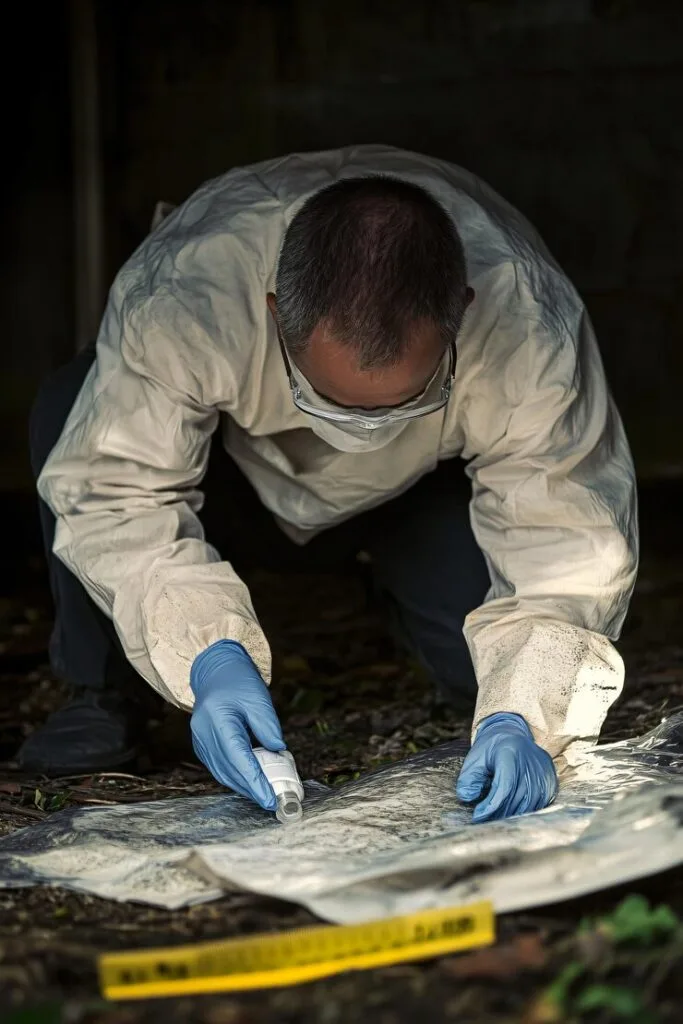
Not all asbestos carries the same level of risk. There are three main types found in UK buildings:
Chrysotile (white asbestos) — the most common type, found in ceilings, roofs and walls. It’s more flexible and heat-resistant, but still hazardous once disturbed.
Amosite (brown asbestos) — commonly used in asbestos insulation board, roofing and ceiling tiles. More brittle than chrysotile and generally considered higher risk.
Crocidolite (blue asbestos) — made up of extremely fine fibres, historically used in high-temperature insulation. Widely regarded as the most dangerous form.
Even a small disturbance can release fibres into the air, regardless of type — which is why professional identification and UKAS-accredited testing matter more than guesswork.
Whether you are looking for asbestos survey london, we provide asbestos report across Central, North, North West, West, South West, South, South East and East London. For dedicated regional coverage, see our North London, East London, Central London, West London and South London hub pages, which cover both commercial and residential inspections.
Central London — Westminster, the City of London, Holborn and Covent Garden (WC1, WC2); Soho, Mayfair, Marylebone and Fitzrovia (W1); Bloomsbury (WC1); St James’s, Pimlico, Victoria and Belgravia (SW1); the South Bank (SE1); Knightsbridge and Chelsea (SW3, SW7); Kensington; Paddington and Bayswater (W2); and Notting Hill (W11). See also our area pages for Pimlico, Notting Hill and South Bank, Paddington, Chelsea, Victoria, Soho, Bloomsbury and Knightsbridge, Marylebone, Bayswater, Holborn and Fitzrovia and Westminster.
North London — Highgate (N6), Muswell Hill (N10), Crouch End (N8), Finsbury Park (N4), Archway (N19), Hampstead (NW3), Golders Green (NW11), Finchley (N2, N3, N12), Mill Hill (NW7), Totteridge and Whetstone (N20), Barnet (EN4, EN5), Enfield Town (EN1, EN2), Palmers Green (N13), Winchmore Hill (N21), Southgate (N14), Edmonton (N9, N18), Bounds Green (N11), Wood Green and Alexandra Palace (N22), and Holloway and Islington (N7, N1).
North West London — Cricklewood (NW2), Kilburn (NW6), Willesden, Harlesden and Neasden (NW10), Wembley and Alperton (HA0, HA9), Kingsbury and Queensbury (NW9), Kenton (HA3), Harrow and South Harrow (HA1, HA2), Pinner (HA5), Ruislip (HA4), Stanmore (HA7), Edgware (HA8), Colindale (NW9), Hendon (NW4), Brent Cross (NW2), and Swiss Cottage (NW3).
West London — Acton (W3), Chiswick (W4), Ealing (W5), West Ealing (W13), Hanwell and Northfields (W7), Hammersmith (W6), Shepherd’s Bush and White City (W12), Holland Park (W8), West Kensington (W14), Southall (UB1, UB2), Brentford (TW8), Isleworth and Osterley (TW7), Hounslow (TW3), Feltham (TW13, TW14), Hayes and Harlington (UB3), Uxbridge (UB8), and West Drayton (UB7).
South West London — Putney and Southfields (SW15), Wandsworth and Earlsfield (SW18), Clapham Junction and Battersea (SW11), Balham (SW12), Tooting (SW17), Wimbledon (SW19), Raynes Park (SW20), Morden (SM4), Colliers Wood (SW19) and Mitcham (CR4), Streatham and Norbury (SW16), Richmond (TW9, TW10), Twickenham (TW1, TW2), Teddington (TW11), Hampton (TW12), Kingston upon Thames (KT1, KT2), Surbiton (KT5, KT6), and New Malden (KT3).
South London — Brixton and Stockwell (SW2, SW9), Clapham (SW4), Vauxhall (SW8), Kennington (SE11), Elephant and Castle (SE1), Camberwell (SE5), Peckham (SE15), Dulwich (SE21, SE22), Herne Hill (SE24), Crystal Palace (SE19), West Norwood (SE27), Upper Norwood (SE19), South Norwood (SE25), Thornton Heath (CR7), Croydon (CR0), Purley (CR8), Coulsdon (CR5), and Addiscombe, Shirley and Selhurst (CR0).
South East London — Deptford (SE8), New Cross (SE14), Brockley (SE4), Lewisham (SE13), Catford and Hither Green (SE6), Blackheath (SE3), Greenwich (SE10), Eltham (SE9), Woolwich and Plumstead (SE18), Abbey Wood and Thamesmead (SE2), Bexleyheath (DA6, DA7), Welling (DA16), Sidcup (DA14, DA15), Chislehurst (BR7), Bromley (BR1, BR2), Beckenham (BR3), Orpington (BR6), and Penge, Anerley and Grove Park (SE20).
East London — Shoreditch, Hoxton, Whitechapel and Stepney (E1, E2), Bethnal Green (E2), Poplar and Canary Wharf (E14), Bow (E3), Stratford (E15), Forest Gate (E7), Plaistow (E13), West Ham (E15), East Ham (E6), Beckton and Canning Town (E16), Barking (IG11), Dagenham (RM8, RM9, RM10), Ilford (IG1), Seven Kings and Goodmayes (IG3), Chadwell Heath (RM6), Romford (RM1–RM3), Hornchurch (RM11, RM12), Upminster (RM14), Wanstead and Leytonstone (E11), Leyton (E10), Walthamstow (E17), Chingford (E4), and Woodford Green (IG8).
Fixed pricing, UKAS-accredited surveyors, and a report you can act on. Get your free, no-obligation quote today.
Yes, for places that are not homes and shared spaces. It isn't always required for private homes, but it is often suggested.
Asbestos constitutes six minerals that have natural resistance to heat and rusting. These minerals can produce harmful fibers if they get disturbed.
Asbestos survey prices can range between £150–£300. It depends on the size of the property.
Mandatory prior to any renovation, demolition, or maintenance work in buildings erected before 2000.
Asbestos testing is done through laboratory tests to determine the type and amount of asbestos.
These varieties include chrysotile (white), amosite (brown), and crocidolite (blue).
As found in Artex ceilings, asbestos insulation boards, pipe lagging, and roof tiles.
Your report will suggest whether to manage the asbestos or remove it. Asbestos removal professionals can be recommended.
It is documentation of completion of asbestos survey and adherence to regulations.
For a professional survey in London, one can contact Safety Spectrum London through phone or emails.
Yes. Ongoing guidance makes sure you know how to move forward in a safe and legal way.
This is up to the provider. It should always be made clear ahead of time.
Do what the report says to do. You don't have to get rid of all of the asbestos.
Reports are usually sent out in a few business days, but faster options are available if you need them.


© 2026 Safety Spectrum London – All Rights Reserved. Company Reg No.16678881
Live Chat