Safety Spectrum London provides professional Residential Fire Risk Assessment London services for landlords, freeholders, managing agents, housing providers and property managers throughout London. Our residential fire risk assessors assess the fire risks associated with the building, communal areas, occupants, escape arrangements and existing fire-safety measures. The assessment is tailored to the property rather than relying on a generic checklist. We provide residential fire risk assessments for HMOs, purpose-built blocks of flats, converted buildings, communal areas, maisonettes, student accommodation, managed residential developments and mixed-use buildings with residential accommodation. Following the assessment, you receive a clear written FRA report identifying significant findings, fire-safety concerns and recommended actions.
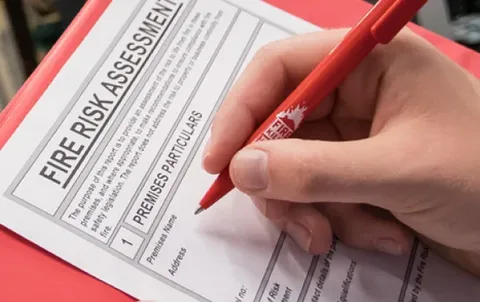
A residential FRA considers how fire could start or spread within the parts of a residential building covered by the assessment, who could be at risk and whether the existing fire precautions are suitable. Safety Spectrum London provides residential FRA services for: Landlords, freeholders, managing agents, block managers, housing associations, property management companies, portfolio landlords, Right to Manage companies, and other Responsible Persons responsible for residential fire safety. Our aim is to provide a practical report that clearly explains the findings and next steps.
The residential fire risk assessment cost depends on the property size, number of floors, occupancy, layout and assessment scope.
Studio / 1-Bed
£79
1–3 Bedrooms
£139
4-6 Bedrooms
£169
Communal Area only
£120
For businesses, offices, stores, restaurants, gyms, and more. Our main concerns are the safety of our employees, the safety of our customers.
For HMOs that have a licence and those that don't. We make sure that we follow the rules set by the local government and our licenses.
For blocks that were built for a specific purpose or changed. We look at stairwells, hallways, communal areas, and fire separation.
Blocks of Flats: We provide Fire Risk Assessments for purpose-built blocks of flats, converted blocks, apartment buildings, communal residential developments, and other multi-occupied residential buildings. The assessment can consider communal corridors, staircases, final exits, fire doors, alarm arrangements, emergency lighting and fire-safety management.
HMOs and Shared Accommodation: Our HMO Fire Risk Assessment service can cover licensed HMOs, shared houses, multi-storey HMOs, student HMOs, converted HMOs, and other relevant shared accommodation. Particular consideration can be given to means of escape, fire detection, fire doors, emergency lighting, occupancy and management arrangements.
Converted Residential Buildings: Older houses converted into flats can present different fire-safety considerations from purpose-built apartment blocks. The FRA can consider the conversion, escape routes, fire separation, doors, detection and management arrangements appropriate to the building.
Communal Areas: We provide Fire Risk Assessments for communal areas including corridors, staircases, entrance halls, lobbies, shared escape routes, service areas, and final exits.
Maisonettes: Maisonettes can have different layouts and management arrangements, so the appropriate Fire Risk Assessment scope should be established according to the individual building.
Student Accommodation: Relevant student accommodation can require consideration of occupancy, sleeping risk, evacuation, fire detection, fire doors and management arrangements.
Specialised and Supported Housing: Where appropriate to the property and assessor competence, assessments can be provided for relevant supported, sheltered, and other specialised residential accommodation.
Mixed-Use Residential Buildings: We can assess residential access areas within mixed-use buildings containing combinations of flats, shops, restaurants, offices, or other commercial premises. Particular consideration may be required around compartmentation, means of escape and management responsibilities.
A residential fire risk assessment is a structured assessment of relevant residential premises designed to identify potential fire hazards, people who may be at risk and the adequacy of existing fire precautions. For multi-occupied residential buildings, the assessment can consider the common parts, building structure, relevant fire doors, external walls and other areas falling within the applicable fire-safety legislation. The objective is to establish whether the existing arrangements adequately manage fire risk and identify any improvements that may be required.
For residential premises that fall within the Fire Safety Order, the legal responsibility normally lies with the Responsible Person. Depending on the building and management arrangements, this may be the freeholder, landlord, management company, Right to Manage company, housing provider, or another organisation or person with control of the relevant common parts. A managing agent may undertake day-to-day fire-safety management on behalf of the Responsible Person, but the legal responsibilities remain with the relevant dutyholder. For blocks of flats, current government guidance confirms that the Responsible Person must assess fire risks relating to common parts and, where applicable, the structure, external walls and flat entrance doors.
Residential fire safety is governed by several pieces of legislation depending on the building.
The Regulatory Reform (Fire Safety) Order 2005 applies to the common parts of buildings containing two or more domestic premises and places duties on the Responsible Person to undertake and record a suitable and sufficient Fire Risk Assessment and maintain appropriate general fire precautions.
The Fire Safety Act 2021 clarified that, in relevant multi-occupied residential buildings, the Fire Safety Order applies to the building structure, external walls including cladding and balconies, and flat entrance doors between domestic premises and the common parts.
The Fire Safety (England) Regulations 2022 introduced additional requirements for multi-occupied residential buildings.
For applicable buildings where the top storey is more than 11 metres above ground level, the Responsible Person must carry out quarterly checks of communal fire doors and use best endeavours to undertake annual checks of flat entrance fire doors.
The Regulations also require Responsible Persons in all relevant multi-occupied residential buildings to provide residents with appropriate fire-safety instructions and information about fire doors.
Additional fire-safety recording and information duties introduced through the Building Safety Act 2022 reinforce the importance of maintaining clear Fire Risk Assessment records and fire-safety arrangements.
For relevant housing premises, BS 9792:2025 – Fire Risk Assessment: Housing – Code of Practice provides current recommendations for carrying out and recording residential Fire Risk Assessments.
BS 9792:2025 replaced PAS 79-2:2020 and provides a structured, risk-proportionate methodology for housing FRAs.
The standard covers relevant HMOs, purpose-built blocks of flats, converted blocks of flats, maisonettes, specialised housing, relevant student accommodation, and residential access areas within mixed-use buildings.
BSI states that BS 9792 does not cover ordinary single-family private dwellings, short-term letting units such as Airbnb-type accommodation, residential care homes or non-domestic premises.
The exact assessment scope depends on the property, occupancy and building type.
Assessment Area | What We Check |
Fire Hazards and Ignition Sources | Potential sources such as electrical equipment, heating, cooking, smoking materials, combustible storage, and other relevant fire hazards. |
People at Risk | Residents, visitors, contractors, elderly occupants, children, people with reduced mobility, and others who may require additional assistance. |
Communal Escape Routes | Corridors, staircases, lobbies, final exits, protected routes, travel routes, and potential obstructions. |
Flat Entrance Fire Doors | Relevant flat entrance doors, self-closing devices, seals, frames, gaps, and visible condition where within the agreed scope. |
Communal Fire Doors | Relevant stairwell doors, corridor doors, riser doors, and other doors forming part of the fire strategy. |
Compartmentation | Visible issues relating to fire-resisting walls and floors, service penetrations, risers, and fire stopping. |
Fire Alarm and Detection | Relevant smoke detection, heat detection, alarm panels, sounders, manual call points, and available testing records. |
Emergency Lighting | Escape-route lighting, stairway lighting, final exits, emergency fittings, and available testing records. |
Fire Safety Signage | Relevant fire action notices, fire exit signs, directional signs, and fire-door notices. |
Firefighting Equipment | Where appropriate, the provision, location, suitability and servicing of firefighting equipment. |
Evacuation Arrangements | The building’s evacuation strategy, resident information, emergency procedures, and arrangements for occupants requiring additional assistance. |
Fire Safety Management | Available testing records, fire-door checks, maintenance documentation, previous FRAs, and other fire-safety records. |
The final inspection scope should always reflect the property type, building configuration, occupancy and agreed assessment requirements.
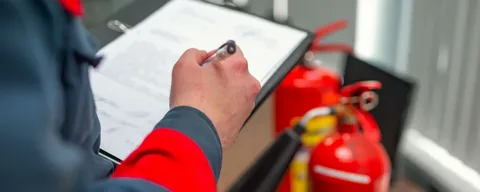
Fire doors are particularly important in blocks of flats because they can help protect communal escape routes and restrict the spread of fire and smoke. For blocks where the top storey is above 11 metres, current regulations require quarterly checks of communal fire doors and best-endeavours annual checks of flat entrance doors, including their self-closing devices. A general residential FRA can identify visible fire-door concerns, but where each individual door requires a comprehensive inspection, a dedicated Fire Door Survey may be recommended separately.
Common Issue | What May Be Identified |
Fire Door Defects | Excessive gaps, defective closers, damaged seals, unsuitable hinges, damaged frames, or doors failing to close and latch correctly. |
Obstructed Communal Areas | Furniture, bicycles, rubbish, personal belongings, or stored materials affecting corridors, staircases and escape routes. |
Insufficient Fire Detection | Missing, damaged or unsuitable smoke detection, heat detection, or communal alarm arrangements. |
Emergency Lighting Deficiencies | Missing or defective emergency lighting or insufficient testing and maintenance records. |
Compartmentation Defects | Unsealed service penetrations, gaps around pipes or cables, or damage to fire-resisting construction. |
Missing Fire Safety Information | Missing or unsuitable fire action notices, resident instructions, signage, or evacuation information. |
Combustible Storage | Storage of combustible materials within communal areas, cupboards or escape routes. |
Poor Fire Safety Records | Missing evidence of alarm tests, emergency lighting tests, fire-door inspections, or maintenance activities. |
The FRA report can identify appropriate recommendations and priorities where deficiencies are found.
Following the assessment, Safety Spectrum London prepares a clear written Residential Fire Risk Assessment report.
Detailed Residential FRA Report The report can cover property details, building use, occupancy, identified hazards, existing fire precautions, people at risk, significant findings, and recommended actions.
Photographic Evidence Relevant photographs may be included where appropriate to make specific findings easier to identify.
Clear Fire Risk Findings Issues are recorded clearly so landlords, managing agents and other Responsible Persons can understand where attention may be required.
Prioritised Action Plan Recommendations can be structured according to priority, helping distinguish more urgent corrective measures, medium-term improvements, and ongoing management actions.
Practical Next Steps Our objective is to provide a report that can be used practically to plan fire-safety improvements and ongoing management.
Different FRA types may be appropriate for blocks of flats depending on the building and whether there are concerns about hidden fire-protection deficiencies.
FRA Type | Scope | Typical Approach |
Type 1 Fire Risk Assessment | Common parts | A non-destructive assessment of relevant common areas. This is commonly used where significant hidden structural deficiencies are not suspected. |
Type 2 Fire Risk Assessment | Common parts | Similar to Type 1 but includes a degree of destructive investigation where hidden deficiencies need further consideration. |
Type 3 Fire Risk Assessment | Common parts + sample flats | Extends the assessment into a sample of flats to consider relevant fire precautions within the dwellings. |
Type 4 Fire Risk Assessment | Common parts + sample flats | A more intrusive assessment that can involve destructive investigation within both common parts and sample flats. |
The correct assessment type depends on the building and circumstances. The most intrusive FRA should not automatically be selected where it is unnecessary.
Where a Type 2 or Type 4 assessment involves destructive investigation in an older building, this may need to be coordinated alongside our Fire Risk Assessment Asbestos Surveys London service, so that any asbestos-containing materials are identified before intrusive work begins.
A residential FRA should be kept under review rather than treated as a document with one universal expiry date.
A review may be appropriate after significant refurbishment, changes to the building layout, changes in occupancy, changes to the evacuation strategy, new fire-safety systems, a fire or significant incident, or where new information suggests that the existing assessment may no longer be suitable.
Government guidance requires the Responsible Person to review the assessment regularly and keep it up to date.
The Fire Safety Act clarified that relevant Fire Risk Assessments for multi-occupied residential buildings must consider the building structure and external walls, including cladding, balconies and other relevant external-wall elements.
In some buildings, a general FRA may identify the need for a more specialist Fire Risk Appraisal of External Walls (FRAEW).
A FRAEW is a separate specialist assessment and should not be confused with the general residential FRA. Current government guidance confirms that an FRAEW may be required where the external-wall risk needs more detailed specialist assessment.
All tests performed comply with written RAMS (Risk Assessment And Method Statement) for total HSE compliance.
You can book an appointment over the phone or online. Same-day and weekend appointments are available across London.
Our experienced assessor visits your property to carry out a full survey in accordance with PAS 79.
You receive a professional report and Fire Risk Assessment Certificate within 24 hours.
We explain our findings, suggest corrective actions, and can quote instantly for remedial work.
Where the FRA identifies deficiencies, Safety Spectrum London can provide separate quotations for relevant remedial services.
Remedial Service | What We Can Provide |
Fire Door Repairs | Door adjustments, frame repairs, intumescent and smoke seals, hinge replacement, door closer work, latch alignment, gap correction, and suitable drop-down seals. |
Fire Door Installation | Supply and installation of appropriate fire-rated doorsets where an existing door cannot reasonably be brought to the required standard through remedial work. |
Fire Alarm Improvements | Alarm testing, replacement alarms, additional detection, system upgrades, panel systems, and new installations where appropriate. |
Emergency Lighting | Testing, certification, replacement fittings, additional emergency lighting, and new installations. |
Fire Extinguishers | Testing, servicing, replacement, mounting, and appropriate signage where portable firefighting equipment is required. |
Fire Stopping | Appropriate investigation, sealing of penetrations, fire-stopping, and other compartmentation remedial works depending on the findings. |
For further information, visit our dedicated Fire Risk Assessment Remedial Works London service.
Selecting a competent assessor is particularly important for residential buildings because the appropriate level of competence should reflect the complexity of the property.
BS 8674:2025 provides a current competence framework for individual fire risk assessors, with Foundation, Intermediate and Advanced competence levels reflecting different building complexities and risk profiles.
Credential / Organisation | Relevance |
IFSM | Relevant fire-safety professionals working with Safety Spectrum London hold credentials associated with the Institute of Fire Safety Managers, together with practical fire-safety experience. |
NEBOSH | Relevant team members hold qualifications supporting professional knowledge of fire safety, risk assessment and safety management. |
City & Guilds | Our wider technical team includes appropriately qualified professionals for relevant technical disciplines. |
Fire Door Training | Relevant specialist fire-door work can be undertaken by personnel with suitable training and practical experience. |
TrustMark | Safety Spectrum London displays TrustMark credentials as part of its wider property-services profile. |
NICEIC | Applicable electrical services are supported by relevant NICEIC credentials. |
Gas Safe | Relevant gas services are undertaken under appropriate Gas Safe registration. |
NICEIC and Gas Safe registrations relate to their respective technical disciplines and should not be interpreted as Residential Fire Risk Assessment qualifications.
Residential Fire Safety Experience We work with landlords, freeholders, managing agents and property managers responsible for a wide variety of London residential buildings.
Clear FRA Reports Our reports are designed to make the findings and recommended actions easier to understand and manage.
Residential and HMO Expertise We provide assessments for HMOs, blocks of flats, converted properties, communal areas, and other relevant residential premises.
Prioritised Recommendations Where issues are identified, recommendations are structured to help clients understand which matters require greater attention.
Remedial Works Available Where relevant, we can separately quote for fire-door repairs, fire-door installation, fire alarms, emergency lighting, fire extinguishers, and appropriate fire-safety remedial work.
London-Wide Coverage We provide Residential Fire Risk Assessments throughout Central, North, North West, West, South West, South, South East and East London, together with selected surrounding M25 locations.
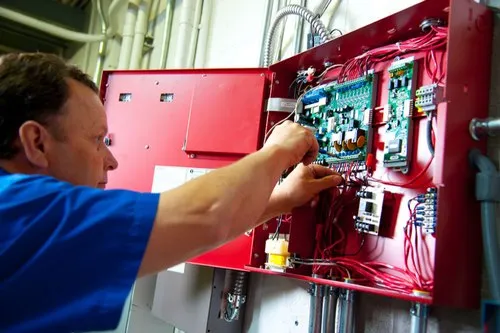
We provide Commercial Fire Risk Assessment services across London, supporting businesses in a wide range of sectors and property types.
If you are a landlord, freeholder, managing agent, block manager, property manager or housing provider requiring a professional Residential Fire Risk Assessment in London, Safety Spectrum London can help.
If you are searching for a fire risk assessment near me, Safety Spectrum London provides local Fire Risk Assessment services throughout London and selected surrounding M25 locations.
Some areas below have dedicated local FRA pages where you can find more information about our coverage.
We provide Fire Risk Assessments throughout Central London.
Our coverage includes Westminster (SW1, W1, WC2), City of London (EC1, EC2, EC3, EC4), Holborn, Fitzrovia and Marylebone (WC1, WC2, W1, NW1), Covent Garden (WC2), Soho, Bloomsbury and Victoria (W1, WC1, SW1), Mayfair (W1), St James’s (SW1), Pimlico and South Bank (SW1V, SE1), Belgravia (SW1W, SW1X), Knightsbridge (SW1X, SW3, SW7), Chelsea (SW3, SW10), Kensington (W8, SW7), Paddington (W2), Bayswater (W2) and Notting Hill (W11, W2).
These dedicated local pages provide additional information for clients requiring a Fire Risk Assessment within specific Central London districts.
Our North London coverage includes Highgate (N6, N19), Muswell Hill (N10), Crouch End (N8), Finsbury Park (N4, N7), Archway (N19), Hampstead (NW3), Golders Green (NW11), East Finchley (N2), Finchley (N3), North Finchley (N12), Mill Hill (NW7), Totteridge (N20), Whetstone (N20), Barnet (EN4, EN5), Enfield Town (EN1, EN2), Palmers Green (N13), Winchmore Hill (N21), Southgate (N14), Edmonton (N9, N18), Bounds Green (N11), Wood Green (N22), Alexandra Palace (N22), Holloway (N7) and Islington (N1).
We cover Cricklewood (NW2), Kilburn (NW6), Willesden (NW2, NW10), Neasden (NW2, NW10), Harlesden (NW10), Wembley (HA0, HA9), Alperton (HA0), Kingsbury (NW9), Queensbury (NW9, HA7), Kenton (HA3), Harrow including Harrow on the Hill, South Harrow, North Harrow and Harrow Weald (HA1, HA2, HA3), Pinner (HA5), Ruislip (HA4), Stanmore (HA7), Edgware (HA8), Colindale (NW9), Hendon (NW4), Brent Cross (NW2, NW4, NW11) and Swiss Cottage (NW3, NW6).
Our West London coverage includes Acton (W3), Chiswick (W4), Ealing (W5), West Ealing (W13), Northfields (W5, W13), Hanwell (W7), Hammersmith (W6), Shepherd’s Bush (W12), White City (W12), Notting Hill (W11), Holland Park (W8, W11), West Kensington (W14), Southall (UB1, UB2), Brentford (TW8), Isleworth (TW7), Hounslow (TW3, TW4, TW5), Osterley (TW7), Feltham (TW13, TW14), Hayes (UB3, UB4), Harlington (UB3), Uxbridge (UB8), Ruislip (HA4), Yiewsley (UB7) and West Drayton (UB7).
We cover Putney (SW15), Wandsworth (SW18), Clapham Junction (SW11), Battersea (SW11), Balham (SW12), Tooting (SW17), Earlsfield (SW18), Southfields (SW18, SW19), Wimbledon (SW19), Raynes Park (SW20), Morden (SM4), Colliers Wood (SW19), Mitcham (CR4), Streatham (SW16), Norbury (SW16), Richmond (TW9, TW10), Twickenham (TW1, TW2), Teddington (TW11), Hampton (TW12), Kingston upon Thames (KT1, KT2), Surbiton (KT5, KT6) and New Malden (KT3).
Our South London coverage includes Brixton (SW2, SW9), Clapham (SW4), Stockwell (SW9), Vauxhall (SW8), Kennington (SE11), Elephant & Castle (SE1, SE17), Camberwell (SE5), Peckham (SE15), Dulwich (SE21, SE22), Herne Hill (SE24), Crystal Palace (SE19), West Norwood (SE27), Upper Norwood (SE19), South Norwood (SE25), Thornton Heath (CR7), Croydon including Central, South and East Croydon (CR0, CR2), Purley (CR8), Coulsdon (CR5), Addiscombe (CR0), Shirley (CR0) and Selhurst (SE25, CR0).
We provide assessments throughout Deptford (SE8), New Cross (SE14), Brockley (SE4), Lewisham (SE13), Catford (SE6), Hither Green (SE13), Blackheath (SE3), Greenwich (SE10), Eltham (SE9), Woolwich (SE18), Plumstead (SE18), Abbey Wood (SE2), Thamesmead (SE28), Bexleyheath (DA6, DA7), Welling (DA16), Sidcup (DA14, DA15), Chislehurst (BR7), Bromley (BR1, BR2), Beckenham (BR3), Orpington (BR5, BR6), Penge (SE20), Anerley (SE20) and Grove Park (SE12).
Our East London service areas include Shoreditch (E1, EC2), Hoxton (N1), Bethnal Green (E2), Whitechapel (E1), Stepney (E1), Poplar (E14), Bow (E3), Canary Wharf (E14), Stratford (E15, E20), Forest Gate (E7), Plaistow (E13), East Ham (E6), West Ham (E15), Canning Town (E16), Beckton (E6), Barking (IG11), Dagenham (RM8, RM9, RM10), Ilford (IG1), Seven Kings (IG3), Goodmayes (IG3), Chadwell Heath (RM6), Romford (RM1, RM2, RM3, RM7), Gidea Park (RM2), Hornchurch (RM11, RM12), Upminster (RM14), Wanstead (E11), Leyton (E10), Leytonstone (E11), Walthamstow (E17), Chingford (E4) and Woodford Green (IG8).
Selected surrounding locations include Watford (WD17, WD18, WD19, WD24, WD25), Bushey (WD23), Borehamwood (WD6), Elstree (WD6), Potters Bar (EN6), Cheshunt (EN7, EN8), Waltham Abbey (EN9), Epping (CM16), Loughton (IG10), Theydon Bois (CM16), Chigwell (IG7), Buckhurst Hill (IG9), Brentwood (CM13, CM14, CM15), Upminster Bridge (RM12), Dartford (DA1, DA2), Swanley (BR8), outer Orpington (BR5, BR6), Epsom (KT17, KT18, KT19), Ewell (KT17, KT19), Leatherhead (KT22), Ashford in Middlesex (TW15), Staines-upon-Thames (TW18), Sunbury-on-Thames (TW16), Shepperton (TW17), Rickmansworth (WD3) and Chorleywood (WD3).
If your location is not listed, send us the property postcode and we can confirm availability.
For relevant multi-occupied residential buildings covered by the Fire Safety Order, the Responsible Person must arrange and record a suitable and sufficient Fire Risk Assessment.
Yes, relevant common parts of blocks containing two or more domestic premises fall within the Fire Safety Order. The assessment scope can also include structure, external walls and flat entrance doors as required by the Fire Safety Act.
Ordinary private domestic premises are generally outside the Fire Safety Order themselves. The FRA normally focuses on relevant common parts and other areas within the legislation. Different requirements can apply depending on the building and occupancy.
Relevant HMOs can require a residential FRA together with other housing and licensing fire-safety requirements.
The Responsible Person is usually the organisation or person controlling the common areas, such as the freeholder, landlord, management company, housing provider, or other relevant dutyholder.
The assessment can consider fire hazards, residents at risk, escape routes, fire doors, compartmentation, detection, emergency lighting, signage, firefighting equipment, evacuation arrangements, and management records.
Our residential FRA prices start from £79, with the final cost depending on property type, size, layout and complexity.
The inspection duration depends on the property. A small residential building may require much less time than a large apartment block, HMO or complex mixed-use development.
BS 9792:2025 is the current British Standard code of practice for Fire Risk Assessments in relevant housing premises and replaced PAS 79-2:2020.
A Type 1 FRA is generally a non-destructive inspection of the relevant common parts of a purpose-built block of flats.
Flat entrance doors can form part of the residential fire-safety assessment where relevant. A full detailed inspection of every individual door may require a separate dedicated Fire Door Survey.
There is no universal fixed expiry period applying to every FRA. It should be reviewed regularly and updated when changes or new risks mean the existing assessment may no longer be suitable.


© 2026 Safety Spectrum London – All Rights Reserved. Company Reg No.16678881
Live Chat