Fully Compliant, Audit-Ready and Professionally Delivered
We test emergency lighting for landlords, managing agents, and businesses all over London. Our engineers are fully qualified by NICEIC and NAPIT, and they follow British Standards and UK fire safety rules when they do inspections.
You receive clear reports, practical advice and compliance-ready certification without stress.If you need a compliant emergency lighting certificate from accredited professionals, we are here to help.
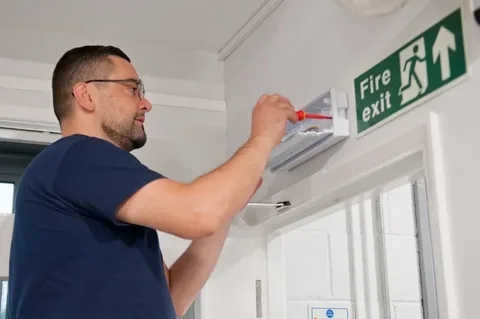
Emergency lighting systems are designed to activate automatically when normal lighting fails. That might be during a power outage, electrical fault or fire-related incident. The system must illuminate escape routes clearly enough for safe evacuation.
In many buildings, these systems are installed and then forgotten. Batteries degrade. Fittings become damaged. Exit signs fade. Without proper testing, you would not know there is a problem until it is too late.
We carry out structured inspections that confirm your system performs exactly as it should.
Upto 3 Lights
£67
3 – 5 Lights
£79
5 – 8 Lights
£89
8 – 12 Lights
£99
Any Additional Light £25 Per Light
Emergency lighting supports safe evacuation when normal lighting stops working. In commercial buildings and shared residential properties, this is a legal requirement.
During a real incident, visibility is reduced, stress levels are high, and people rely on clear direction. Working escape lighting prevents trips, panic, and blocked exits.
British Standard BS 5266 tells you how emergency lighting should work. It makes sure that fire safety equipment, escape routes, staircases, changes in floor level, and intersections are all still easy to see.
Proper illumination reduces risk. It also allows emergency services to navigate buildings safely.
An emergency lighting certificate confirms that the system has been inspected and tested in accordance with relevant standards. It documents:
This certificate forms part of your fire safety documentation and may be requested during audits or inspections.
Yes. It is required for most commercial properties and buildings where people live together.
The Responsible Person has the legal duty. It could be the landlord, the managing agent, the employer, or the owner of the building.
The Regulatory Reform Fire Safety Order 2005 says that emergency exits and routes must be lit up in case normal lighting fails. Not following the rules can lead to enforcement notices, prosecution, and significant financial penalties.
BS 5266 is the official set of rules for emergency lighting systems. It includes guidance for installation, maintenance, and testing. Following this standard shows that practical steps have been taken to meet legal and safety obligations.
The Responsible Person must:
Ignoring these duties exposes both legal and financial risk.
A logbook should keep track of monthly functional checks and full-length duration tests each year. Fire authorities and insurers often ask for these records during inspections.
Clear documentation protects you if questions arise and demonstrates compliance.
Insurers may refuse claims if safety systems were not properly maintained. Fire authorities can issue enforcement or prohibition notices where serious failings are found.
Regular professional testing reduces that risk and supports business continuity.
Emergency lighting requirements apply to a wide range of properties. Proper testing and certification ensure safety, compliance, and peace of mind for occupants and property owners.
Emergency lighting that meets regulatory standards must be installed in shared areas of houses with more than one tenant. During a power outage, hallways, landings, and staircases need to remain illuminated to prevent accidents and ensure safe evacuation.
Systems that comply with regulations are required in shared hallways, entrance lobbies, and stairwells. Managing agents are typically responsible for maintaining these systems and ensuring they remain up to date.
All non-residential buildings that accommodate staff or the public must have properly maintained emergency lighting. Safe escape routes are essential to protect occupants in the event of a power failure or emergency.
Buildings housing individuals who may be vulnerable or at higher risk have an increased duty of care. Emergency lighting must function consistently to ensure safe evacuation at all times.
Managing multiple properties can make compliance challenging. Structured testing schedules and consolidated reporting help ensure every site meets legal requirements and maintains safety standards.
We offer professional EICR testing for offices and commercial sites, ensuring your business stays fully compliant with minimal disruption.
We deliver quick, accurate electrical fault-finding to identify issues early and prevent costly repairs or system failures.
We provide fast, certified electrical inspections for homes and rentals, ensuring complete safety and compliance at competitive rates.
We provide modern, compliant fuse box upgrades that enhance safety, reduce tripping, and meet all 18th-Edition regulations.
We provide fast, efficient PAT testing with instant digital reports to keep your appliances, staff, and tenants fully protected.
Our services include comprehensive end-to-end solutions, ranging from design, installation, and periodic testing, to maintenance and certification.
We install Maintained, Non-Maintained, and Combined emergency lighting systems for residential, commercial, and other properties. ensuring clear illumination of escape routes, stairs, and exits.
Testing ensures all emergency lights work properly during power loss through monthly checks, six-month partial tests, and an annual three-hour discharge test.
After each test, we provide a BS 5266 compliant certificate and update your logbook, serving as essential proof for fire authority inspections, insurance audits, fire risk assessments,.
Our engineers replace faulty lamps, batteries, and units to keep your emergency lighting reliable, compliant, and free from performance issues.
Our services include replacement of the batteries in emergency lights for both maintained and unmaintained fixtures. Our use of NiCd and lithium batteries has enabled us to provide longer lasting power.
If there are any failed lights, we will provide quick corrective services to enable full functionality. Once the lights are fixed, a test will be carried out, and a new certificate will then be obtained.
Test Type | Who Carries It Out | What It Involves | Recommended Frequency | Why It Matters |
Daily Visual Check | Responsible Person / On-site staff | Quick visual check of indicator lights and obvious damage | Daily (where applicable in higher-risk environments) | Confirms system is powered and ready |
Monthly Functional Test | Responsible Person (trained) | Simulated mains failure using test key to confirm lights activate | Monthly | Ensures automatic activation works properly |
Interim Discharge Test | Competent Person (where required) | Partial discharge test depending on risk profile | Every 6 months (site dependent) | Verifies battery performance between annual tests |
Annual Full-Duration Test | Qualified / Competent Engineer | Full 3-hour battery discharge and recharge verification | Once every 12 months | Confirms system meets legal duration requirement |
Photometric Verification | Specialist Assessment | Detailed illumination level check using light measurement tools | Every 5 years (recommended in certain settings) | Ensures escape routes still meet required light levels |
Documentation matters. It protects you during audits and inspections.
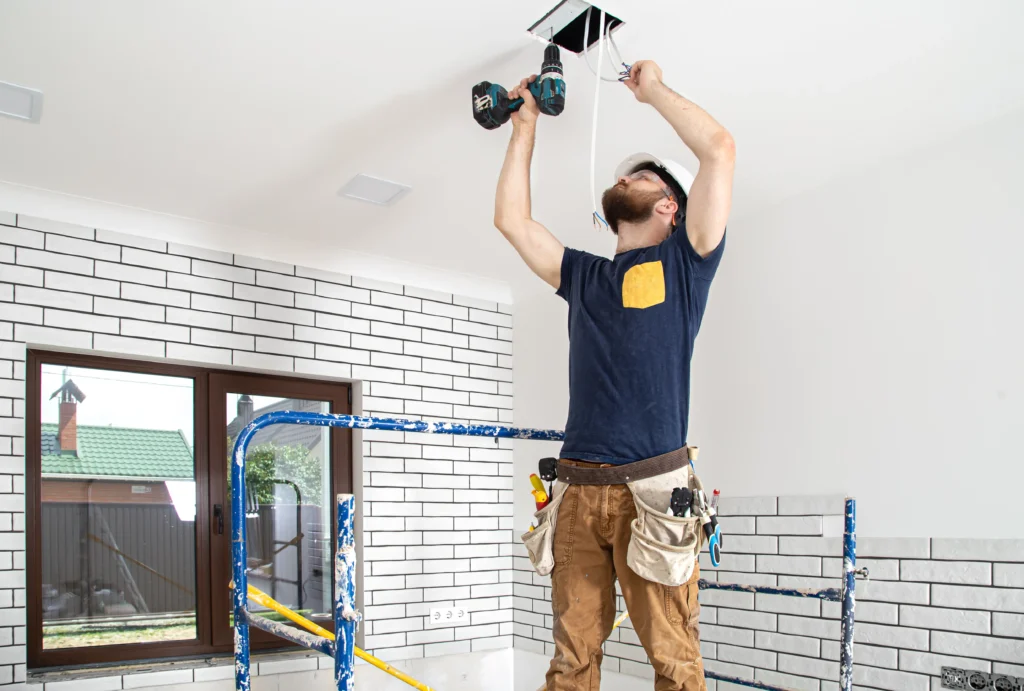
All tests performed comply with written RAMS (Risk Assessment & Method Statement) for total HSE compliance.
Our qualified electricians conduct all commercial EICRs with little disruption.
Get your report and your EICR certificate for commercial premises in 24–48 hours
If issues arise, we quote and complete works promptly to issue a Satisfactory EICR Certificate.
Trust is built through consistent performance. Our clients stay with us because we focus on doing the job properly, every time.
Systems vary depending on the building layout, occupancy level and risk profile. We adapt our inspection approach accordingly.
Failing to test emergency lighting is not just an administrative issue. It can expose property owners and managers to serious legal, financial and safety consequences.
We provide structured emergency lighting testing services throughout Greater London and the surrounding M25 region.
Local Engineers with Nationwide Capability
While our core focus is London, we can support clients with regional portfolios where required, ensuring consistency of reporting and compliance standards across multiple sites.
Don’t wait until your next fire audit ensure your building is safe and compliant today.
Function tests every month, and also a full 3-hour test every year, in line with BS5266 requirements.
Yes. The Regulatory Reform (Fire Safety) Order 2005 requires all duty holders to ensure safe evacuation in case of emergency, which includes maintaining operational emergency lighting.
Prices range from £69 for up to 10 lights, including EOL certification and logbook entry.
The failure will also be recorded, and we will provide a free quote for its rectification. This will enable us to produce a satisfactory certificate upon completion.
Definitely. Our services include HMOs, apartment buildings, student accommodations, and rental properties in London.
Yes. We supply and install new emergency lighting systems compliant with BS 5266, including LED fittings and decorative units.
Your emergency lighting certificate will arrive via email, inside 24 hours from completion of the test.
Emergency lighting should be tested monthly and annually in line with BS 5266.
Yes emergency lighting testing is legally required under the Regulatory Reform (Fire Safety) Order 2005.
Emergency lighting testing in London typically starts from £69 for up to 10 fittings.


© 2026 Safety Spectrum London – All Rights Reserved. Company Reg No.16678881
Live Chat