If asbestos has already been identified in your property, managing the risk does not end with the original survey. Asbestos-containing materials (ACMs) can often remain safely in place when they are in good condition and unlikely to be disturbed. However, their condition can change over time due to age, damage, maintenance work, water ingress or changes in how an area is used. Safety Spectrum London provides professional asbestos re-inspection surveys in London for dutyholders, landlords, managing agents, facilities managers and commercial property owners. We inspect previously identified or presumed ACMs, assess whether their condition has changed and provide clear information to help keep your asbestos records and management arrangements up to date.


EXCELLENT Based on 10 reviews
 Posted on Google
 Viktoria RybchynskaGood and fast work! Fire door and certification! Recommend 👌Posted on Google
 jackie cookeQuick to respond to emails, work booked in within a week and well priced. Tenant happy with the person who completed the PAT test. Highly recommendPosted on Google
 synymyrGrade D LD1 smoke alarm system installed. Excellent customer service from Haider and Syed, and a dedicated and careful installation by electrical engineer William. A reduced invoice was volunteered when 3 existing smoke alarms were able to be integrated into the job. A young company, but proficient, assiduous and with clear, timely communication. Highly recommend.Posted on Google
 DEBEE LAYCOCKVery helpful, well informed assessor. Excellent service, reasonable pricing. We will use this company again for our rental properties.Posted on Google
 Salma SaidI needed the service fast. And they booked me for the next day. Happy with the service.Posted on Google
 J1Great communications (friendly and responsive over WhatsApp), flexible (was able to fit us in at short notice), and good value (compared to some other quotes I received). I would recommend for anyone needing an efficient FRA.Posted on Google
 John WeekendsaGood quality and service. Very easy communication with management and highly skilled engineers.Posted on Google
 Clement MegueuleI arranged an EPC inspection through this company and was very happy with the experience. The engineer who attended was friendly and professional, thank you. As a private landlord, it’s great to work with a reliable company and not to deal with any issues. I would definitely recommend them and thanks Haider again.Posted on Google
 Yevheniia PohorielovaGreat service! Prompt, reliable, and very professional. The team is friendly and easy to deal with and they always complete gas safety and EICR inspections efficiently. In my experience they are one of the best companies in London for landlords and property management. Highly recommended.
A management survey is designed for buildings in normal use. It identifies ACMs that could be disturbed during day-to-day activities or routine maintenance. This survey is commonly needed for: Commercial premises (offices, retail, warehouses)Communal areas in blocks of flatsRental properties under managed portfoliosFacilities and property management complianceWhat it delivers Clear identification of ACMs (or presumed ACMs where relevant)Condition notes and practical control adviceAn asbestos register and support for a management plan
If you are planning refurbishment, strip-out, or demolition, an R&D survey is normally required before works begin. This survey is more intrusive and focuses on the areas where work will take place. We inspect hidden or concealed areas where asbestos could be present, such as:Walls, floors, ceiling voids, risers, and service routesInsulation boards and legacy panelsLagging and insulation around servicesWhy it matters Helps contractors avoid accidental exposureSupports project planning and timelinesReduces risk of enforcement action and delays
If you suspect asbestos in a specific product, sampling and testing may be suitable. This is common for materials such as: Artex and textured coatingsRoofing sheets and tilesBoards, panels and suspect insulation productsSamples are sent to a UKAS-accredited laboratory for analysis. Results are usually available within 24–48 hours (depending on lab service level). You receive clear confirmation of: Whether asbestos is presentThe asbestos type (where detectable)What action is recommended next?
If you already have an asbestos register, materials must be monitored to ensure they remain in stable condition. A reinspection survey checks whether ACMs have changed since the last report due to wear, damage, or maintenance. This helps you: Keep compliance records up to dateMaintain a reliable asbestos registerShow ongoing duty holder management
Are you uncertain about the type of survey you require? We can help you choose the correct survey type and explain what it means for your property. We prioritise safety and compliance in our advice. Where asbestos is found, we guide you on the right next step, which may include safe management, encapsulation, or referral to licensed removal contractors if needed.
An asbestos re-inspection survey is a follow-up inspection of previously identified or presumed asbestos-containing materials.
Unlike an initial asbestos survey, the main purpose is not to search the whole building for new ACMs. Instead, the surveyor returns to known locations and checks whether the materials have remained in a suitable condition.
A re-inspection can look at:
The findings can then be used to update the asbestos register and support ongoing asbestos management.
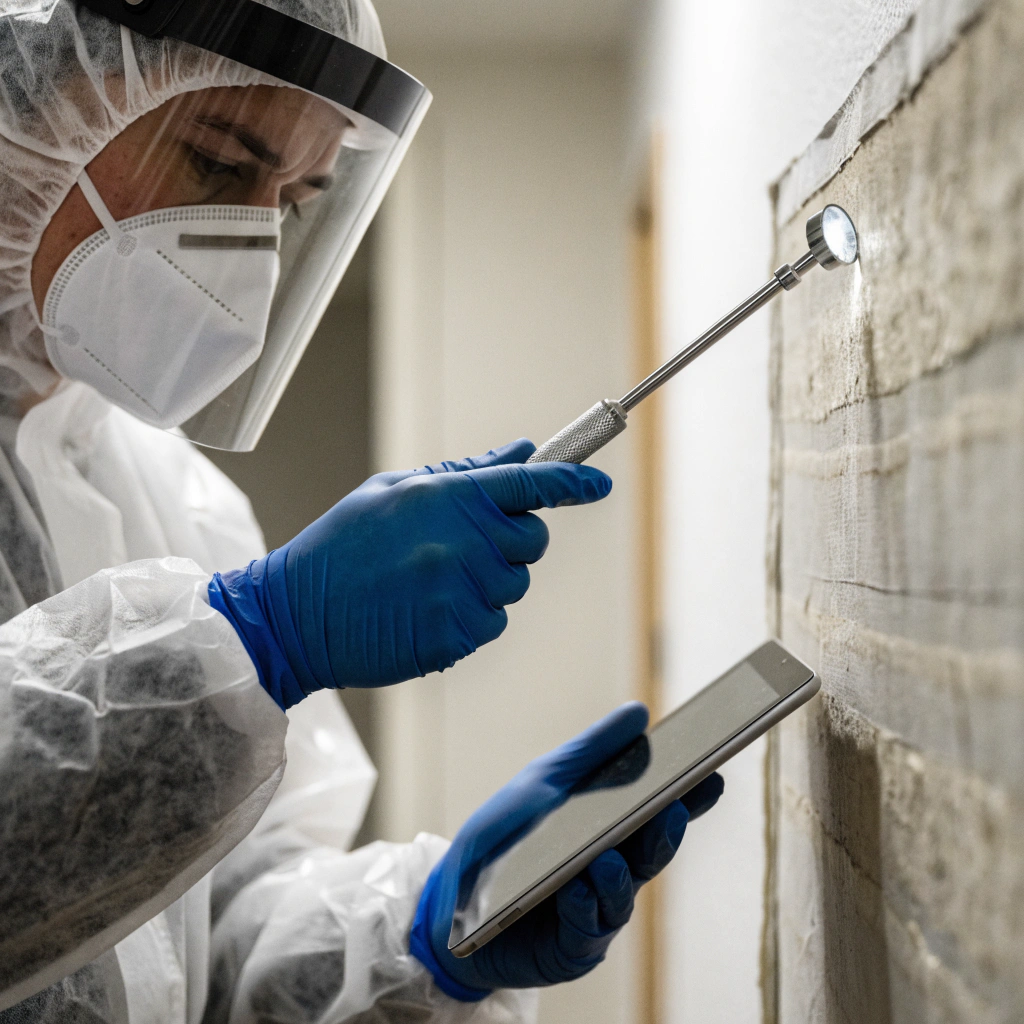
Asbestos does not always need to be removed. Where ACMs
are in good condition and can be safely managed, leaving them in place may be appropriate. The important point is that their condition must continue to be monitored. A material that was previously low risk may become more vulnerable if it is damaged, exposed to water, disturbed during maintenance or affected by changes within the building. Regular monitoring helps identify these changes before the risk increases further.
| Aspect | Asbestos Management Survey | Asbestos Re-inspection Survey |
|---|---|---|
| Main Purpose | To identify asbestos-containing materials (ACMs) that may be disturbed during normal occupation, use, or routine maintenance of a building. | To reassess asbestos-containing materials that have already been identified or presumed. |
| When It Is Used | Usually carried out where the location and condition of ACMs need to be established for ongoing building management. | Usually carried out after an asbestos register already exists and known or presumed ACMs require periodic review. |
| What It Checks | Identifies the presence, location and condition of ACMs that could be affected during normal use or maintenance. | Checks whether known or presumed ACMs are still present and whether their condition has changed. |
| Asbestos Register | Provides information that can be used to create or update an asbestos register. | Helps keep the existing asbestos register accurate and up to date. |
| Management Plan | Provides information needed to develop or update an asbestos management plan. | Helps determine whether existing management actions remain appropriate or need to be changed. |
| Condition Assessment | Assesses the condition of ACMs identified during the survey. | Reviews whether previously identified ACMs have deteriorated, been damaged or become more accessible. |
| Disturbance Risk | Considers whether ACMs could be disturbed during normal occupation and routine maintenance. | Checks whether the likelihood of disturbance has increased since the previous inspection. |
| Typical Outcomes | Identification of ACMs, asbestos register information and recommendations for ongoing management. | Confirmation of whether ACMs remain in good condition, require closer monitoring, remedial action or a change in management controls. |
Asbestos re-inspection is particularly relevant to people responsible for managing buildings where asbestos has already been recorded.
Under Regulation 4 of the Control of Asbestos Regulations 2012, those responsible for maintenance or repair of relevant non-domestic premises may have a duty to manage asbestos risk. This includes keeping information on the location and condition of known or presumed ACMs current and maintaining suitable management arrangements.
The duty to manage can apply to the common parts of multi-occupancy domestic buildings, including areas such as entrance halls, stairs, lifts, roof spaces, storerooms and other communal areas. Re-inspection can therefore be important for blocks of flats, estates and other managed residential buildings where ACMs are known to remain in communal areas.
Offices, shops, warehouses, factories and other workplaces may contain asbestos materials that remain safely managed in place. Owners, employers and facilities teams need reliable information about their location and condition, particularly before maintenance or building work takes place.
Buildings managed across larger estates or property portfolios can contain ACMs in different locations and conditions. A planned re-inspection programme can make it easier to keep asbestos registers consistent and current across multiple sites.
Regulation 4 does not generally apply to the privately occupied parts of ordinary domestic homes in the same way that it applies to non-domestic premises. However, asbestos information can still be important where maintenance, refurbishment or demolition work could disturb suspect materials. A suitable asbestos survey may be required before intrusive work begins.
The purpose of asbestos management is not simply to have an old survey stored on file. The information needs to remain useful. Under the duty to manage, relevant dutyholders must take reasonable steps to identify asbestos, assess its condition, maintain records and put suitable management arrangements in place. HSE guidance also requires the condition of ACMs to be kept under review so that the asbestos management plan remains current.
The asbestos register should show where known or presumed ACMs are located and provide useful information about their condition. If materials deteriorate but the register is never updated, people carrying out maintenance or repair work may be working from information that no longer reflects the building.
Materials left in place should be monitored according to their condition and likelihood of disturbance. HSE continues to emphasise active asbestos management and condition monitoring, rather than treating the original survey as a one-off exercise.
The management plan should remain relevant to the current building and the asbestos risks present. It should be reviewed when circumstances change or where there is reason to believe that existing information is no longer valid.
Relevant information about known or presumed asbestos should be available to people who may disturb it, including contractors and maintenance teams. Good records help reduce the chance of accidental disturbance.
There is no single re-inspection interval that is suitable for every property. The correct frequency depends on the ACMs, their condition, location, accessibility and the likelihood that they could be disturbed.
Many asbestos management programmes use regular planned reviews, and an annual review may be appropriate in some situations. However, higher-risk or more vulnerable materials may need more frequent monitoring. The existing management plan and previous survey findings should help determine the appropriate interval.
Do not wait for the next planned review if something has changed. An earlier inspection may be appropriate following:
If you cannot confirm when known ACMs were last inspected, or the asbestos register has not been updated for a long time, it may be sensible to review the records and arrange a re-inspection. The goal is to make sure that the information being relied upon still reflects the condition of the building.
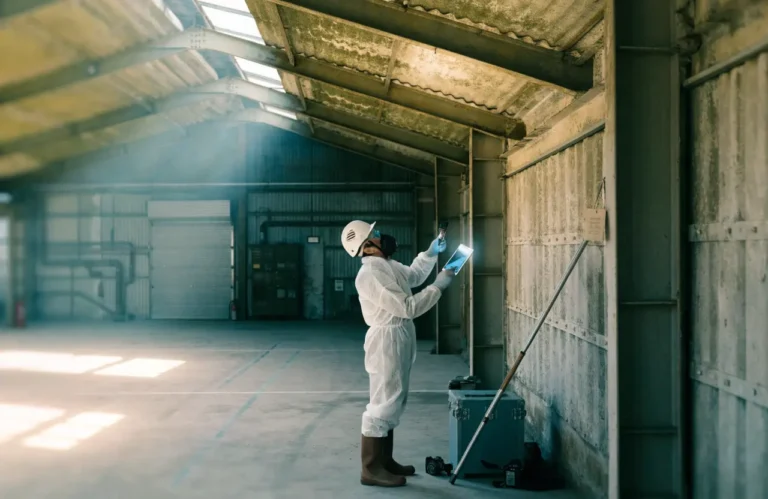
Our re-inspection service focuses on providing clear, practical information that can support ongoing asbestos management.
Before the visit, we can review available documents such as:
This helps define the inspection scope.
The surveyor revisits recorded ACM locations and assesses the materials in their current condition.
We look for changes that could affect how the material should be managed. This may include deterioration, increased accessibility, damage or greater potential for disturbance.
Clear photographs and location references help make future asbestos management easier.
Depending on the findings, recommendations may include:
The findings can be used to keep your asbestos register and management arrangements up to date.
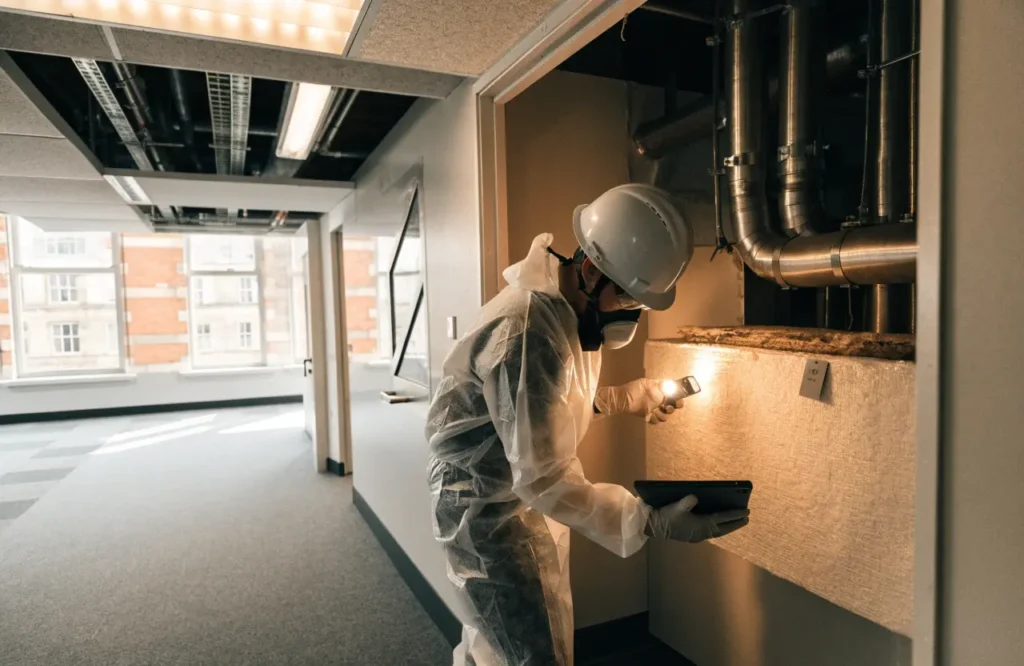
A re-inspection is based on the actual condition of the ACM at the time of the visit. The surveyor may consider:
Surface Condition: Cracking, broken surfaces, abrasion or other deterioration can increase the chance of fibre release.
Water or Environmental Damage: Leaks, moisture and environmental conditions can affect materials that were previously stable.
Accessibility: Materials located in busy or easily accessible areas may have a greater chance of accidental disturbance.
Likelihood of Disturbance: The way an area is used matters. A material inside a protected, rarely accessed space may present a different management issue from the same material next to regular maintenance activity.
Changes Since the Previous Survey: Alterations to the building, maintenance work or changes in room use can affect the level of risk. The inspection findings help determine whether the existing management approach remains suitable.
We can connect you with licensed asbestos removal contractors if required.
Finding deterioration does not automatically mean that every ACM needs to be removed. The correct response depends on its condition, location and risk.
Continued Management: If the material remains in a suitable condition, continued management and monitoring may still be appropriate.
Encapsulation: In some situations, sealing or encapsulating the material can help reduce the likelihood of fibre release.
Repair or Remedial Work: Minor damage may require suitable specialist repair or additional protection.
Asbestos Removal: Removal may be recommended where an ACM can no longer be managed safely in place or where planned building work is likely to disturb it. The type of asbestos work will determine whether a licensed asbestos contractor is required.
Immediate Precautions: Where a material appears seriously damaged or there is concern that fibres could be released, access to the area may need to be restricted until competent advice is obtained. Do not disturb suspected asbestos yourself.
Yes. Safety Spectrum London can work from asbestos information prepared by another competent provider, provided the records contain enough information to plan the re-inspection safely and effectively.
An existing survey or register can normally be reviewed before attendance to confirm:
The age of a report does not automatically make it unusable. However, it should still reflect the building and provide enough reliable information to identify the materials that need re-inspection.
Where information is unclear, missing or no longer suitable, we can advise whether additional investigation or a new asbestos survey would be more appropriate.
Not only big businesses need to have their sites reinspected. They apply to anyone who is in charge of managing the risk of asbestos.
Duty holders responsible for non-domestic premises:According to UK law, people who are responsible for non-domestic buildings must make sure that asbestos is handled correctly.
Landlords and managing agents responsible for communal areas:If you run blocks of flats or HMOs, you are in charge of the shared areas.
Commercial property owners, employers and facilities teams:Asbestos exposure must be avoided at all costs for employees, contractors, and visitors.
Housing providers, estates teams and multi-site portfolio managers:When you own more than one property, you need to keep an eye on asbestos in a consistent and organised way.
When domestic properties may still need practical asbestos monitoring:Homeowners should know if asbestos is still safe over time, even if their legal responsibilities are different.
Safety Spectrum London provides professional asbestos re-inspection services across a wide range of residential, commercial, public and managed properties throughout London. Our service is suitable for organisations and dutyholders who already have known or presumed asbestos-containing materials within their buildings and need to keep records current, monitor material condition and support ongoing asbestos management.
We provide asbestos re-inspection surveys for offices, business centres, shops, retail units, restaurants, hotels, hospitality venues and other commercial workplaces. Commercial buildings often contain older materials in areas such as service cupboards, plant rooms, ceiling voids, risers, basements and back-of-house spaces. Re-inspection helps check whether previously identified ACMs remain in a suitable condition and whether the existing management approach is still appropriate.
We support managing agents, freeholders, housing providers, property managers and facilities teams responsible for blocks of flats, estates and managed residential developments. Re-inspection can cover communal areas such as corridors, stairways, entrance halls, meter cupboards, plant rooms, roof spaces, service risers, basements and shared storage areas where asbestos has already been identified or presumed. This is particularly useful for keeping asbestos registers and management records current across individual buildings or larger portfolios.
We provide asbestos re-inspection services for schools, nurseries, colleges, universities, academies, training centres and other educational premises. Older education buildings can contain asbestos within ceiling systems, panels, service areas, heating systems and other building materials. Regular monitoring helps estates and facilities teams understand whether known ACMs have changed in condition or become more likely to be disturbed.
Our asbestos re-inspection service is available for clinics, medical centres, GP practices, dental surgeries, care homes, supported living facilities and other healthcare premises.
These buildings may require careful asbestos management because maintenance work, frequent occupation and access requirements can increase the need for accurate and up-to-date records. We aim to carry out inspections with minimal disruption to staff, residents, patients and normal operations.
We provide asbestos re-inspection surveys for warehouses, factories, workshops, industrial units, manufacturing premises and storage facilities.
Industrial buildings can contain asbestos in roofing sheets, insulation products, wall panels, service areas, plant rooms and older mechanical systems.
Re-inspection helps dutyholders monitor these materials and identify changes caused by wear, vibration, maintenance activity, water ingress or accidental damage.
We support shops, showrooms, restaurants, cafés, bars, hotels and other hospitality premises.
Older commercial units may contain asbestos behind shop fittings, in ceilings, service areas, kitchen zones, basements or plant spaces.
Where ACMs are already recorded, re-inspection helps ensure the existing information remains accurate before maintenance, repairs or refurbishment work is planned.
Safety Spectrum London can provide asbestos re-inspection support for community centres, council-managed premises, libraries, places of assembly, public buildings and other managed estates.
These properties may have a wide range of building ages and materials. Keeping asbestos records current helps support safe maintenance planning and contractor access.
We support housing associations, local housing providers, residential estates and managed accommodation portfolios.
Asbestos re-inspection can help monitor known ACMs within communal areas and other managed parts of residential buildings, especially where there are multiple blocks or large portfolios.
We can also support organisations responsible for several buildings, multiple sites or larger property portfolios.
A planned asbestos re-inspection programme can help standardise record keeping, monitor changes across different properties and make it easier to identify locations where further action may be needed.
This can be particularly useful for managing agents, housing providers, commercial landlords, facilities management companies, education estates and multi-site businesses.
We also provide re-inspection support for mixed-use properties containing both residential and commercial areas.
These buildings can include shops or offices at ground level with flats above, shared service areas, communal access routes and plant spaces.
A clear asbestos register and regular condition monitoring can help ensure responsibilities are understood across different parts of the building.
Where asbestos has already been identified, re-inspection may also be useful before planned maintenance or minor building work to confirm whether the known material remains in the condition previously recorded.
For refurbishment or demolition work that could disturb hidden materials, however, a separate Refurbishment and Demolition Survey may be required rather than relying on re-inspection alone.
Choosing the right provider is important because asbestos re-inspection is not just about checking a material again. The survey needs to provide reliable information that can be used to manage risk, update records and plan the correct next step.
With Safety Spectrum London, you benefit from:
Our asbestos re-inspection work is carried out by suitably qualified and competent professionals, including surveyors with BOHS P402 qualifications. This qualification is relevant to surveying buildings for asbestos-containing materials and supports a professional approach to asbestos inspection, assessment and reporting.
Where additional asbestos sampling or material analysis is required, samples can be submitted to a UKAS-accredited laboratory. This provides reliable laboratory confirmation of whether asbestos is present in a sampled material and, where detectable, the asbestos type.
We provide asbestos re-inspection support across a range of sectors, including property management, commercial offices, retail, hospitality, education, healthcare, industrial and warehouse premises, public-sector buildings and managed residential communal areas. This means the inspection approach can be adapted to the way the property is used and the type of asbestos management responsibilities involved.
A re-inspection should provide useful information for the next stage of asbestos management.
Our reports are designed to help dutyholders understand:
The aim is to provide clear information that can actually be used to manage the property safely rather than producing a report that simply sits on file.
Safety Spectrum London provides professional asbestos re-inspection surveys throughout London, helping dutyholders, landlords, managing agents, facilities managers and property owners keep existing asbestos information current and monitor known or presumed asbestos-containing materials. We support commercial properties, communal residential areas, workplaces, educational buildings, healthcare premises, industrial sites and managed property portfolios across London and selected areas around the M25.
If you are unsure whether your property is due for a re-inspection, or you want a clear, professional review of your existing asbestos records, we are here to help.
Safety Spectrum London provides asbestos re-inspection services across London, from Central London through to the wider Greater London area and selected surrounding towns.
Central London: We cover Westminster (SW1), City of London (EC1–EC4), Holborn and Bloomsbury (WC1), Covent Garden (WC2), Soho, Mayfair, Marylebone and Fitzrovia (W1), St James’s, Pimlico, Victoria and Belgravia (SW1), South Bank (SE1), Knightsbridge (SW1/SW7), Chelsea (SW3/SW10), Kensington (W8/W14), Paddington and Bayswater (W2), and Notting Hill (W11).
North London: Our asbestos re-inspection coverage includes Highgate (N6), Muswell Hill (N10), Crouch End (N8), Finsbury Park (N4), Archway (N19), Hampstead (NW3), Golders Green (NW11), Finchley (N2/N3/N12), Mill Hill (NW7), Totteridge and Whetstone (N20), Barnet (EN5), Enfield Town (EN2), Palmers Green (N13), Winchmore Hill (N21), Southgate (N14), Edmonton (N9/N18), Bounds Green (N11), Wood Green and Alexandra Palace (N22), Holloway (N7) and Islington (N1).
North West London: We cover Cricklewood (NW2), Kilburn (NW6), Willesden, Neasden and Harlesden (NW10), Wembley (HA9), Alperton (HA0), Kingsbury and Colindale (NW9), Queensbury (HA8), Kenton (HA3), Harrow including Harrow on the Hill, South Harrow, North Harrow and Harrow Weald (HA1–HA3), Pinner (HA5), Ruislip (HA4), Stanmore (HA7), Edgware (HA8), Hendon and Brent Cross (NW4), and Swiss Cottage (NW3).
West London: Safety Spectrum London provides asbestos re-inspections in Acton (W3), Chiswick (W4), Ealing and West Ealing (W5/W13), Northfields (W13), Hanwell (W7), Hammersmith (W6), Shepherd’s Bush and White City (W12), Holland Park (W11), Southall (UB1/UB2), Brentford (TW8), Isleworth (TW7), Hounslow and Osterley (TW3/TW7), Feltham (TW13), Hayes and Harlington (UB3/UB4), Uxbridge (UB8/UB10), Yiewsley and West Drayton (UB7).
South West London: Our coverage includes Putney (SW15), Wandsworth, Earlsfield and Southfields (SW18), Clapham Junction and Battersea (SW11), Balham (SW12), Tooting (SW17), Wimbledon and Colliers Wood (SW19), Raynes Park (SW20), Morden (SM4), Mitcham (CR4), Streatham and Norbury (SW16), Richmond (TW9/TW10), Twickenham (TW1/TW2), Teddington (TW11), Hampton (TW12), Kingston upon Thames (KT1/KT2), Surbiton (KT5/KT6) and New Malden (KT3).
South London: We provide asbestos re-inspection surveys in Brixton (SW2/SW9), Clapham (SW4), Stockwell (SW9), Vauxhall (SW8), Kennington (SE11), Elephant & Castle (SE1/SE17), Camberwell (SE5), Peckham (SE15), Dulwich and Herne Hill (SE21/SE22/SE24), Crystal Palace (SE19/SE20), West Norwood, Upper Norwood and South Norwood (SE19/SE25/SE27), Thornton Heath (CR7), Croydon, Purley, Coulsdon, Addiscombe, Shirley and Selhurst (CR0/SE25).
South East London: Coverage includes Deptford (SE8), New Cross (SE14), Brockley (SE4), Lewisham and Hither Green (SE13), Catford (SE6), Blackheath (SE3), Greenwich (SE10), Eltham (SE9), Woolwich and Plumstead (SE18), Abbey Wood (SE2), Thamesmead (SE28), Bexleyheath (DA6/DA7), Welling (DA16), Sidcup (DA14/DA15), Chislehurst (BR7), Bromley (BR1/BR2), Beckenham (BR3), Orpington (BR5/BR6), Penge, Anerley and Grove Park (SE20/SE12).
East London: Safety Spectrum London covers Shoreditch and Hoxton (EC2/N1), Bethnal Green and Whitechapel (E2/E1), Stepney (E1), Poplar and Canary Wharf (E14), Bow (E3), Stratford (E15/E20), Forest Gate (E7), Plaistow (E13), East Ham (E6), West Ham and Canning Town (E15/E16), Beckton (E6), Barking (IG11), Dagenham and Chadwell Heath (RM6/RM8–RM10), Ilford, Seven Kings and Goodmayes (IG1–IG3), Romford and Gidea Park (RM1–RM7), Hornchurch (RM11/RM12), Upminster (RM14), Wanstead (E11), Leyton and Leytonstone (E10/E11), Walthamstow (E17), Chingford (E4) and Woodford Green (IG8).
Surrounding Towns Near the M25: We also provide asbestos re-inspection services in selected locations around Greater London, including Watford (WD17–WD25), Bushey (WD23), Borehamwood and Elstree (WD6), Potters Bar (EN6), Cheshunt and Waltham Abbey (EN7–EN9), Epping, Loughton and Theydon Bois (CM16/IG10), Chigwell and Buckhurst Hill (IG7/IG9), Brentwood (CM13–CM15), Dartford and Swanley (DA1/DA2/BR8), Epsom and Ewell (KT17–KT19), Leatherhead (KT22), Ashford Middlesex (TW15), Staines-upon-Thames (TW18/TW19), Sunbury and Shepperton (TW16/TW17), and Rickmansworth and Chorleywood (WD3).
If your area is not listed above, contact Safety Spectrum London with your property postcode. We can confirm whether we can arrange an asbestos re-inspection survey at your location.
There is not a single rule stating that every building must have a formal re-inspection at one fixed interval. However, dutyholders covered by Regulation 4 of the Control of Asbestos Regulations 2012 must manage asbestos risk, keep records current and regularly review the condition of known or presumed ACMs.
There is no universal interval for every property. The appropriate frequency depends on factors such as the condition, location, accessibility and likelihood of disturbance of the ACMs. Annual review may be suitable for some asbestos management programmes, while higher-risk materials may require more frequent monitoring.
No. A re-inspection checks known or presumed ACMs that have already been recorded. A new survey may be needed where asbestos has not previously been identified, records are incomplete or the building is undergoing significant work.
Not usually. If the material has already been identified and the information remains reliable, the re-inspection normally focuses on its condition. Sampling may be recommended where there is uncertainty or additional suspect material needs identification.
Yes. Where ACMs remain in good condition and can be safely managed, continued monitoring may be appropriate. Removal is not automatically required simply because asbestos is present.
The appropriate action depends on the condition and risk. Recommendations may include restricting access, repair, encapsulation, further specialist assessment or removal.
Yes. We can usually work from an asbestos survey or register prepared by another competent provider, provided the information is suitable for planning the re-inspection.
Send us the information you have. We can review it and advise whether a re-inspection, management survey or other asbestos service is more appropriate.


© 2026 Safety Spectrum London – All Rights Reserved. Company Reg No.16678881
Live Chat