Safety Spectrum London provides professional fire extinguisher testing and inspection in London for businesses, landlords, managing agents and property managers. Our services focus on checking the condition, accessibility, positioning and maintenance status of portable fire extinguishers, identifying equipment defects and highlighting issues that could affect their reliability in an emergency. Whether you manage an office, restaurant, warehouse, retail shop, HMO or residential building, regular fire extinguisher inspections help maintain effective firefighting arrangements and support your fire safety responsibilities. If you are searching for fire extinguisher testing near me or fire extinguisher inspection near me, Safety Spectrum London provides inspection services across Greater London.
Fire extinguishers can develop pressure loss, corrosion, physical damage and defective components even when they have not been used. Missing safety pins, damaged hoses, obstructed access and overdue servicing can also affect the reliability of firefighting equipment.
Our fire extinguisher inspection services in London help property owners identify these concerns before they become more serious. We examine equipment condition, review existing maintenance records and identify extinguishers requiring servicing, replacement or further investigation. Our inspections support fire safety management with reference to BS 5306-3, BS 5306-8 and the property’s fire risk assessment findings.










EXCELLENT Based on 10 reviews
 Posted on Google

 Viktoria RybchynskaGood and fast work! Fire door and certification! Recommend 👌Posted on Google
 jackie cookeQuick to respond to emails, work booked in within a week and well priced. Tenant happy with the person who completed the PAT test. Highly recommendPosted on Google
 synymyrGrade D LD1 smoke alarm system installed. Excellent customer service from Haider and Syed, and a dedicated and careful installation by electrical engineer William. A reduced invoice was volunteered when 3 existing smoke alarms were able to be integrated into the job. A young company, but proficient, assiduous and with clear, timely communication. Highly recommend.Posted on Google
 DEBEE LAYCOCKVery helpful, well informed assessor. Excellent service, reasonable pricing. We will use this company again for our rental properties.Posted on Google
 Salma SaidI needed the service fast. And they booked me for the next day. Happy with the service.Posted on Google
 J1Great communications (friendly and responsive over WhatsApp), flexible (was able to fit us in at short notice), and good value (compared to some other quotes I received). I would recommend for anyone needing an efficient FRA.Posted on Google
 John WeekendsaGood quality and service. Very easy communication with management and highly skilled engineers.Posted on Google
 Clement MegueuleI arranged an EPC inspection through this company and was very happy with the experience. The engineer who attended was friendly and professional, thank you. As a private landlord, it’s great to work with a reliable company and not to deal with any issues. I would definitely recommend them and thanks Haider again.Posted on Google
 Yevheniia PohorielovaGreat service! Prompt, reliable, and very professional. The team is friendly and easy to deal with and they always complete gas safety and EICR inspections efficiently. In my experience they are one of the best companies in London for landlords and property management. Highly recommended.
Fire extinguisher testing and inspection involves assessing portable firefighting equipment to identify visible defects, pressure-related concerns, accessibility issues and maintenance requirements. These checks help establish whether extinguishers appear to remain in suitable condition or require further professional attention. Routine inspections do not normally involve discharging or dismantling extinguishers. More advanced procedures, such as controlled discharge testing and cylinder pressure testing, are separate activities carried out when required as part of specialist maintenance.
Our fire extinguisher testing and inspection services cover key equipment components, physical condition, positioning and maintenance information. The inspection scope includes the following checks according to the equipment type.
We examine the external condition of extinguisher cylinders for visible dents, corrosion, cracks, leakage, deterioration and other signs of physical damage that could affect equipment safety.
Where a pressure gauge is fitted, we check the indicated pressure and identify abnormal readings that may require further investigation. Pressure loss can indicate leakage or other equipment-related problems. A normal gauge reading alone does not confirm that an extinguisher is fully operational.
Safety pins and tamper seals are examined for visible damage, missing components and evidence of previous operation or interference. Broken or missing seals may indicate that an extinguisher requires further assessment.
We examine accessible discharge hoses, nozzles and horns for visible cracks, deterioration, obstruction and physical damage that could interfere with the discharge of the extinguishing agent.
We check whether extinguishers remain in their designated locations, are clearly visible and can be accessed without obstruction from furniture, stock, machinery or other stored materials.
Existing wall brackets, floor stands and protective cabinets are assessed for visible damage, instability and unsuitable mounting arrangements. Equipment should remain securely positioned without obstructing escape routes.
We check whether extinguishers remain in their designated locations, are clearly visible and can be accessed without obstruction from furniture, stock, machinery or other stored materials.
We review equipment identification signs, operating instructions and extinguisher labels to identify missing, damaged or illegible information that could cause confusion during an emergency.
Existing service labels, commissioning information and available maintenance records are reviewed to identify overdue servicing, missing documentation and equipment requiring additional maintenance.
We review extinguisher types and documented fire ratings in relation to known fire hazards. Where equipment appears unsuitable for its intended location, further assessment or replacement may be recommended.
Regular inspections help identify equipment defects and maintain effective firefighting arrangements. A fire extinguisher inspection checklist should include:
Any concerns identified during routine checks should be investigated promptly to establish whether servicing, repair or replacement is necessary.
Safety Spectrum London provides condition assessments and inspections for different types of portable firefighting equipment. Inspection requirements vary according to the extinguisher’s construction, operating mechanism and extinguishing agent.
Cylinder condition, pressure indicators, hoses and equipment identification.
External condition, pressure indicators, discharge components and maintenance records.
Cylinder condition, discharge horns, safety components and maintenance information.
External damage, pressure indications, hoses, seals and equipment positioning.
Cylinder condition, discharge applicators, safety components and suitability for commercial cooking risks.
Equipment condition, accessible components and manufacturer-specific inspection requirements.
Although fire extinguisher testing, inspection and servicing are closely related, they serve different purposes within a property’s fire safety arrangements.
Service | Purpose |
Fire extinguisher inspection | Identifies visible defects, accessibility issues and equipment condition concerns. |
Fire extinguisher testing | Includes equipment checks or specialist test procedures according to the agreed scope. |
Fire extinguisher servicing | Involves scheduled professional maintenance, including basic and extended servicing where applicable. |
Fire extinguisher installation | Covers equipment selection, supply, positioning, fitting and commissioning. |
An inspection alone does not replace annual professional servicing. Where an extinguisher requires maintenance or replacement, our separate fire extinguisher servicing and installation services can help address the identified requirements.
Different extinguisher designs require different methods of assessing equipment condition. It is important to understand the difference between routine pressure indicator checks and specialist test procedures.
Stored-pressure extinguishers commonly incorporate a pressure indicator that provides information about their internal pressure condition. Abnormal readings may indicate pressure loss, overpressure or a defective gauge. Conventional CO₂ extinguishers generally do not have pressure gauges and require different assessment methods during professional maintenance.
Cylinder pressure testing, also known as hydrostatic pressure testing, is a specialist procedure used to assess the structural integrity of applicable pressurised extinguisher cylinders. It is not part of an ordinary visual inspection and must be undertaken by competent personnel using specialist equipment and applicable testing procedures.
Controlled discharge testing may form part of extended servicing for certain extinguisher types. This procedure can involve discharging the extinguishing agent and completing further examination and maintenance before the equipment is returned to service. Routine fire extinguisher inspections do not require discharge testing. Where specialist pressure testing, discharge testing or overhaul is necessary, the required procedures should be established separately according to the equipment's maintenance requirements.
Fire extinguisher inspection frequency depends on the equipment type, building environment, level of risk and manufacturer recommendations. Routine visual inspections and professional maintenance should form part of the property’s ongoing fire safety arrangements.
Inspection or Maintenance Type | Recommended Frequency |
Routine visual inspection | At least monthly |
Additional visual checks in higher-risk environments | More frequently where required |
Basic professional servicing | Every 12 months for most conventional extinguishers |
Extended servicing for many conventional water, foam, powder and wet chemical extinguishers | Every 5 years |
Conventional CO₂ extinguisher overhaul | Generally every 10 years |
Inspection following damage, discharge or suspected tampering | Promptly after identification |
These intervals represent general recommendations for conventional portable extinguishers. Specialist equipment may have different maintenance requirements.
Monthly fire extinguisher inspections help responsible persons identify visible equipment defects between professional servicing appointments. These checks can generally be undertaken by the responsible person or a designated individual who understands the inspection requirements. Monthly inspections should focus on equipment condition, accessibility, location, pressure indications, safety seals and maintenance status. Properties with increased public access, exposure to accidental damage, harsh environmental conditions or higher risks of interference may require more frequent checks. Inspection findings should be recorded within the property’s fire safety logbook, and any identified defects should be addressed. Monthly visual inspections do not replace annual professional fire extinguisher servicing. Further information is available through the BAFE fire extinguisher servicing and inspection guidance.
Professional fire extinguisher inspections can be particularly useful when property owners are uncertain about the condition, maintenance history or suitability of existing firefighting equipment.
You should consider arranging an inspection in the following circumstances:
Where an extinguisher has been discharged, damaged or identified as potentially unsafe, further assessment and corrective action should not be delayed until the next scheduled servicing appointment.
Fire extinguishers can develop various defects throughout their service life. Regular inspections help identify visible problems before they lead to more serious equipment concerns.
Common defects include:
The significance of each defect depends on its nature, equipment condition and the fire risks present within the property.
An unsatisfactory fire extinguisher inspection does not automatically mean that the equipment requires replacement. The appropriate corrective action depends on the type and severity of the identified defect.
Minor defects may include obstructed access, missing identification signage or unsuitable positioning. These issues can often be addressed through straightforward corrective measures.
Pressure-related concerns, damaged components, overdue servicing and defective safety mechanisms may require professional maintenance or specialist investigation before the extinguisher can be considered suitable for continued service.
Extinguishers with significant corrosion, cylinder damage, obsolete components or unsuitable fire ratings may require replacement. Equipment identified as unsafe should be removed from service through appropriate arrangements, with replacement firefighting provision maintained where necessary. Safety Spectrum London can help customers address identified deficiencies through our fire extinguisher servicing, replacement and installation services.
Fire extinguisher inspection records provide property owners and responsible persons with information about equipment condition, identified defects and recommended corrective action. Maintaining accurate records also helps support future servicing arrangements and wider fire safety management.
Depending on the agreed inspection scope, documentation can include:
An inspection report records findings within the agreed assessment scope. It does not establish that specialist pressure testing, discharge testing or annual servicing has been completed unless those procedures were specifically undertaken and documented.
Safety Spectrum London provides commercial fire extinguisher testing and inspection in London for employers, business owners, commercial landlords and facilities managers. Our services help businesses identify equipment defects, review firefighting arrangements and maintain effective fire safety records.
Our commercial inspection services cover:
Contact Safety Spectrum London to arrange commercial fire extinguisher testing and inspection for your business.
We provide residential and HMO fire extinguisher inspection in London for landlords, managing agents and property managers where portable firefighting equipment is provided. Our inspections help identify equipment defects, maintenance requirements and accessibility concerns.
Inspection of extinguishers provided in accordance with identified fire risks and licensing conditions.
Condition checks of firefighting equipment provided under the building's fire strategy.
Inspection of existing extinguishers where provided.
Equipment checks within shared facilities and designated communal spaces.
Identification of defective, damaged or overdue firefighting equipment.
Coordinated inspection services across multiple managed properties.
Landlords and property managers responsible for multiple buildings need clear information about the condition and maintenance status of existing firefighting equipment. Safety Spectrum London helps identify missing extinguishers, overdue servicing, damaged components and equipment requiring replacement across individual properties and wider property portfolios. Coordinated inspections can help simplify equipment inventories, maintenance planning, defect management and communication between landlords, managing agents and maintenance teams.
A fire risk assessment may identify concerns relating to missing extinguishers, unsuitable equipment, overdue maintenance, obstructed access or incorrect positioning. Professional fire extinguisher inspections can help establish the condition of existing equipment and determine whether additional maintenance or corrective work is necessary. If your fire risk assessment contains recommendations relating to portable firefighting equipment, Safety Spectrum London can review the relevant findings and discuss the required inspection, servicing or installation work. We also provide fire risk assessment services in London for customers requiring a wider assessment of their property’s fire safety arrangements.
Fire extinguisher inspection and maintenance requirements in England are supported by applicable fire safety legislation, recognised British Standards and manufacturer instructions.
Article 13 of the Regulatory Reform (Fire Safety) Order 2005 addresses the provision of firefighting equipment where necessary, while Article 17 requires relevant fire safety equipment and facilities to be maintained in efficient working order and good repair. Regular inspections help identify defects and support the responsible person’s maintenance arrangements.
BS 5306-3:2017 provides recommendations for the commissioning and maintenance of portable fire extinguishers, including routine visual inspections, professional servicing and applicable specialist maintenance procedures.
BS 5306-8:2023 provides recommendations for selecting and positioning portable fire extinguishers. These recommendations are relevant when reviewing equipment types, fire ratings, accessibility and the distribution of firefighting equipment within a property.
The BS EN 3 series establishes relevant product requirements for portable fire extinguishers, including construction, performance, testing and marking. Equipment identification and documented fire ratings help establish suitability for particular fire hazards.
Further information about fire safety equipment and maintenance responsibilities is available through GOV.UK workplace fire safety guidance.
The cost of fire extinguisher testing and inspection in London depends on the number of extinguishers, equipment types, property layout and required inspection scope. Smaller properties may require only a limited number of equipment checks, while larger commercial buildings and property portfolios may require more extensive assessments.
Inspection costs can be affected by:
Contact Safety Spectrum London with your property details and extinguisher quantities to receive a quotation based on your inspection requirements.
The duration of a fire extinguisher inspection depends on the number of extinguishers, property layout, equipment accessibility and required assessment scope. Properties with extensive equipment inventories, multiple floors or incomplete maintenance records may require additional inspection time. Routine condition checks generally involve less extensive procedures than professional servicing or specialist cylinder testing. Providing existing equipment inventories and maintenance information can help establish the inspection requirements before the appointment.
Safety Spectrum London follows a structured inspection process to check the condition, location and readiness of portable fire extinguishers and identify any equipment requiring servicing or replacement.
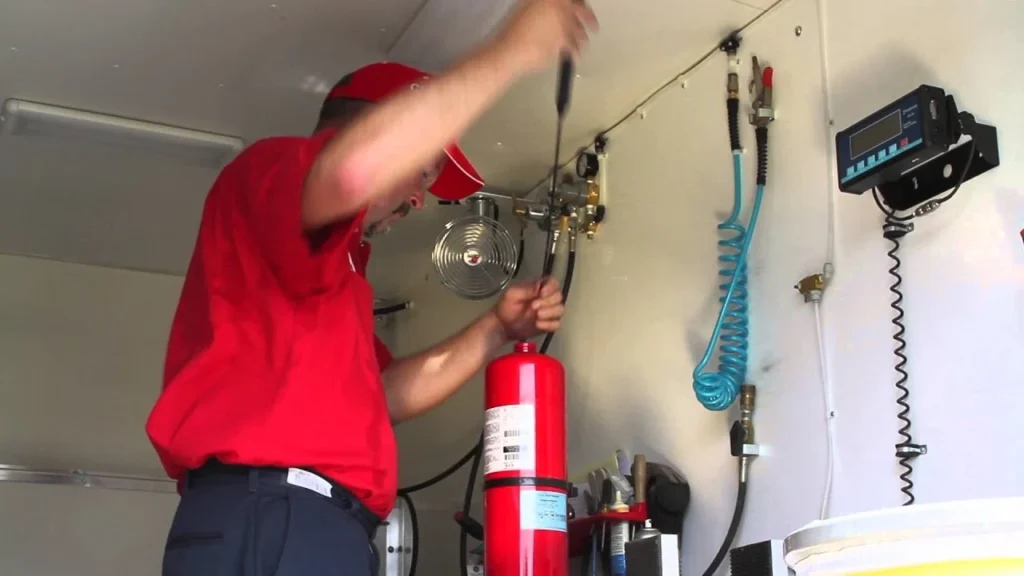
Safety Spectrum London provides fire safety inspection services focused on identifying equipment deficiencies, maintaining effective firefighting arrangements and supporting property owners with their wider fire safety responsibilities.
Examination of extinguisher condition, accessible components and visible defects.
Identification of equipment requiring maintenance, replacement or further investigation.
Inspection services for different property types across Greater London.
Clear guidance on addressing identified equipment concerns.
Inspection scopes based on property requirements and equipment quantities.
Coordinated inspection arrangements for landlords, businesses and managing agents.
Access to related servicing, installation, fire risk assessments and remedial works.
Damaged, inaccessible or poorly maintained fire extinguishers can compromise a property’s firefighting arrangements. Regular inspections help identify equipment concerns, establish maintenance requirements and address deficiencies before they become more serious. Whether you require a fire extinguisher condition assessment, inspection of existing commercial equipment or coordinated checks across multiple properties, Safety Spectrum London can help.
Comprehensive fire risk assessments carried out by qualified assessors across London. Identify hazards, stay compliant, and protect your property with clear recommendations.
We design, install, and commission fully compliant fire alarm systems in line with BS 5839 standards, ensuring early detection, reliable performance, and complete legal compliance.
Annual servicing, maintenance, and supply of fire extinguishers for all property types. Ensures full compliance with BS standards and keeps your premises safe and protected.
We provide professional fire door inspections and detailed reports to assess fire door condition, identify safety defects, and support fire safety compliance for residential and commercial properties.
We provide reliable fire door maintenance services, including adjustments, hardware checks, and repairs to help maintain fire resistance, correct operation, and ongoing fire safety.
We conduct detailed fire door surveys to assess door condition, fire-rated components, gaps, seals, hinges, and closers, identifying defects and recommending suitable remedial actions.
We provide professional fire-rated door replacement services, including suitable FD30 and FD60 doorsets, helping improve fire protection and meet relevant building safety requirements.
We provide professional fire door repair services, addressing damaged components, faulty hinges, defective closers, and door alignment issues to help restore safe operation and fire protection.
We carry out fire door remedial works to address inspection defects, including unsuitable gaps, damaged seals, faulty closers, and non-compliant hardware, helping improve fire door safety and performance.

West London

East London

South London

North London

Central London

Outer London
The terms are often used interchangeably when referring to routine equipment checks. However, specialist procedures such as cylinder pressure testing and discharge testing are different from ordinary visual inspections and require additional technical procedures.
The Regulatory Reform (Fire Safety) Order 2005 requires relevant firefighting equipment to be appropriately maintained. Routine inspections and professional servicing support these maintenance responsibilities, with recognised inspection recommendations provided under BS 5306-3.
Routine monthly visual inspections can generally be carried out by the responsible person or a designated individual who understands the inspection requirements. Professional maintenance and specialist testing require appropriate competence.
Yes. Fire extinguishers can develop corrosion, pressure loss, damaged components and other defects even when they have never been discharged. Regular inspections help identify these concerns.
Yes. A normal pressure gauge reading does not confirm that every component is functioning correctly. Other defects, such as damaged hoses, corrosion, defective operating mechanisms or obstructed discharge components, may still require attention.
A broken tamper seal may indicate previous operation or interference. The extinguisher should receive further assessment to establish whether maintenance, recharging or replacement is necessary.
An extinguisher that has been fully or partially discharged should receive prompt professional attention. Depending on its type and condition, recharging, servicing or replacement may be required before it is returned to service.
An inspection can identify manufacturing dates, available maintenance records and overdue servicing. However, extinguisher service life depends on its design, condition, manufacturer requirements and maintenance history rather than a universal expiry date.
Routine visual inspections and equipment condition checks generally involve limited disruption. Access to extinguisher locations and relevant maintenance records should be arranged before the inspection.
Existing fire extinguishers can be assessed regardless of their original supplier, subject to equipment condition, product identification and accessibility. Available commissioning and servicing records can help establish further maintenance requirements.

Safety Spectrum London provides landlord safety certificates and property compliance services across London.
© 2026 Safety Spectrum London – All Rights Reserved. Company Reg No.16678881
Live Chat