
Certified Passive Fire Protection Repairs That Restore Compliance and Protect Occupants
Fire safety repairs are not just small jobs that need to be done. They are steps that fix a building’s passive fire protection systems so that they work properly again. When fire doors don’t work right or fire compartments are broken into, the results can be bad. Smoke travels quickly. Escape routes are no longer safe. The law becomes very real.
After building safety reforms, there has been more scrutiny across London, which has made documented compliance more important. Fire Risk Assessments find problems. Fire door inspections show problems that do not meet standards. Insurance companies want proof. Local governments want clear action.
Our job is simple. We find out what went wrong, restore what should have been protected, and give documented, traceable proof that the problem has been fixed.
If you already have a Fire Risk Assessment or fire door report, you can send it to us for review. We will advise clearly on priority, scope and next steps.
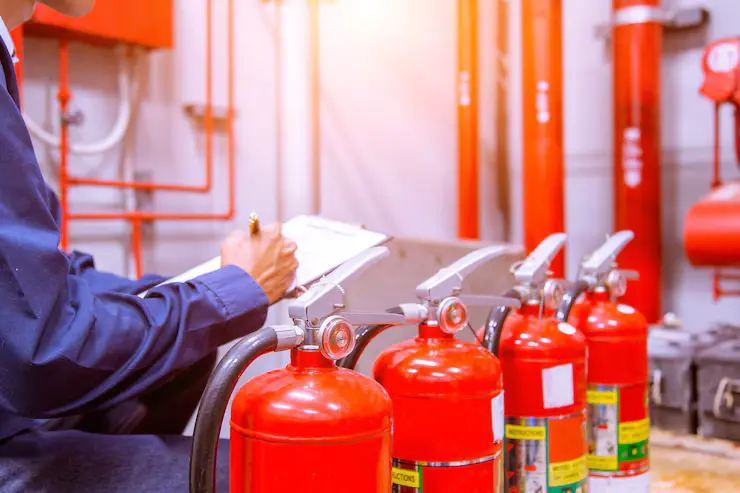
Remedial work fixes problems with passive fire protection systems. These are the parts of the building that keep fire and smoke in certain areas for a certain amount of time.
Fire-resistant walls, floors, risers, doors, glazing systems, and fire stopping around service penetrations are all examples of passive fire protection. When these parts are damaged, the building’s plan for keeping things inside is less effective.
Most projects to fix things start with written reports of what was found. A Fire Risk Assessment might find problems with escape routes or breaches in compartmentation. A fire door survey may show that there are too many gaps, missing seals, or broken self-closers.
Remedial works are the planned response to those results. They must follow UK fire safety laws and accepted standards for how well they work.
Compartmentation makes it harder for smoke and fire to spread. It keeps escape routes safe and gives people time to leave and respond to emergencies.
When walls or floors are penetrated by cables, pipes or ducts, the fire rating must be reinstated using suitable tested systems. Remedial fire stopping restores that barrier and ensures continuity of fire resistance.
Fire doors are frequently used and often damaged through daily wear. However, a door that does not close fully or has incorrect gaps cannot perform as designed.
Remedial works may include adjusting hinges, replacing seals, upgrading hardware, correcting frame alignment or, where necessary, replacing non-compliant doors.
Refurbishment and maintenance works frequently create compartment breaches. Electrical upgrades, plumbing modifications and HVAC installations are common causes.
Unsealed penetrations allow smoke to travel rapidly between compartments. Proper remedial intervention ensures these openings are sealed using appropriate materials and installation methods.
Guidance from UK fire safety authorities highlights the importance of effective compartmentation, particularly in residential buildings operating under stay-put strategies.
When passive protection fails, containment time reduces. That directly affects occupant safety and increases legal exposure for those responsible.
Remedial works are typically required following formal inspection, but they can arise at several stages in a building’s lifecycle.
Under the Regulatory Reform Fire Safety Order 2005, the Responsible Person must ensure fire safety measures are maintained. If deficiencies are identified, corrective action is required within a reasonable timeframe.
Failure to act can lead to enforcement action.
Service installations are one of the most common causes of compartment breaches. Remedial works are necessary where penetrations have not been correctly sealed.
During due diligence processes, fire safety compliance is often scrutinised. Identified defects may require resolution before transactions proceed.
New management frequently uncovers historic defects. Addressing these early prevents future compliance issues.
Regular inspections inevitably identify wear and minor failures. Remedial works form part of responsible long-term maintenance.
Not every defect carries equal urgency. A structured approach allows sensible planning without compromising safety.
Defects affecting protected escape routes, severely defective fire doors on corridors, or significant riser breaches require prompt attention.
Component upgrades or isolated penetration sealing can often be scheduled within a managed timeframe.
Some issues may not present immediate danger but should be monitored and resolved within maintenance cycles.
Breaking works into priority categories allows property managers to plan expenditure logically rather than reacting under pressure.
Escape routes are always given priority. The objective is to preserve safe evacuation pathways and containment performance.
A clear process provides control and transparency.
Documentation protects you long after the work is finished.
Replacement is not always necessary.
When Fire Doors Can Be Repaired Instead of Replaced:Where the door leaf remains structurally sound, component upgrades often restore compliance.
Maintaining Asset Value While Restoring Compliance:Repairing where appropriate avoids unnecessary expenditure while achieving the required standard.
Honest Reporting and Transparent Recommendations: If replacement is required, we explain the technical reason clearly.
Sustainable and Practical Remedial Approaches:Reducing waste and extending asset life supports responsible building management.
The legal responsibility for fire safety sits with the Responsible Person.
Understanding Legal Duties Under UK Fire Safety Legislation:The Regulatory Reform Fire Safety Order 2005 requires fire safety measures to be maintained in efficient working order.
Why Competent Contractors Are Essential:Incorrect installation can invalidate compliance. Competence is critical.
Protecting Against Enforcement Action and Liability:Documented remedial works demonstrate proactive management.
Insurance Considerations and Demonstrating Due Diligence:Clear evidence supports insurance discussions.
Maintaining a Clear Audit Trail for Inspections:Organised documentation reduces stress during inspections.
Certain issues appear repeatedly across London properties.
Excessive Fire Door Gaps and Failed Self-Closers:Doors must close fully and maintain correct tolerances to perform effectively.
Missing or Damaged Intumescent and Smoke Seals:Without functioning seals, smoke can spread rapidly.
Unsealed Cable, Pipe and Duct Penetrations:Openings around services are frequent weaknesses.
Breached Service Risers and Ceiling Voids:Vertical voids allow rapid fire travel if not correctly sealed.
Non-Compliant Glazing and Fire-Resisting Partitions:Incorrect systems reduce fire resistance performance.
Remedial works often follow third-party activities.
Remedials Following Electrical Installations:Additional circuits frequently result in unsealed penetrations.
Fire Stopping After Plumbing and HVAC Works:Pipework modifications must be correctly sealed to maintain fire rating.
Preventing Repeat Breaches During Refurbishment:Early coordination prevents recurring issues.
Protecting Compartmentation During Ongoing Maintenance:Regular review helps maintain integrity.
Every building is different.
Targeted Repairs in Smaller Residential Blocks:Isolated works may be completed within days.
Phased Works in Multi-Storey Developments:Larger buildings require structured scheduling.
Commercial and Mixed-Use Property Programmes:Operational needs are factored into planning.
Factors That Influence Project Duration:Access, defect volume and building complexity all affect timelines.
Prevention reduces long-term expenses.
We support a broad range of property types.
Clients value clarity and accountability.
Often yes, provided the structural integrity remains sound.
Timing depends on risk level and access availability.
You receive documented confirmation of completed works.
We plan carefully to reduce disruption.
Yes. Existing reports help define scope efficiently.
We advise clearly and provide options before proceeding.
Yes, most of the time. There may be short power outages, but full vacancy is not usually needed.
More research is needed. Before we suggest a fix, we will test and find the exact problem.
Only suitable fire-rated systems are used.
Send your report or contact us to arrange a review.


© 2025 Safety Spectrum London – All Rights Reserved. Company Reg No.16678881
Live Chat