
We offer professional fire risk assessments to landlords, businesses, and managing agents all over London. All assessments are done by qualified, independent fire safety assessors who follow UK fire safety law to the letter.We assess:
Fast turnaround • Clear reports • Accepted by councils and insurers.

For homes, apartments, and buildings with shared spaces. We check the lighting, alarms, fire doors, escape routes and shared spaces.
For businesses, offices, stores, restaurants, gyms, and more. Our main concerns are the safety of our employees, the safety of our customers.
For HMOs that have a licence and those that don't. We make sure that we follow the rules set by the local government and our licenses.
For blocks that were built for a specific purpose or changed. We look at stairwells, hallways, communal areas, and fire separation.
Different environments require different fire safety approaches.
Offices, Retail Premises and Shopping Centres, Workplaces and Commercial Buildings, Warehouses and Distribution Centres, Industrial Buildings and Factories, HMOs (Houses in Multiple Occupation), Shared Residential Accommodation, Blocks of Flats and Apartment Buildings, Communal Residential Buildings, Hotels, Hostels and Guest Houses, Restaurants, Cafes and Hospitality Venues, Hospitals and Healthcare Facilities, Schools, Colleges and Educational Buildings, Universities and Student Accommodation, Care Homes and Assisted Living Facilities, Leisure Centres and Gyms, Entertainment Venues and Theatres, Data Centres and Financial Buildings, Agricultural Buildings and Farms, Military and Government Facilities, Mixed-Use Buildings, Construction Sites and Temporary Buildings, Places of Worship Including Churches, Mosques and Temples, and Car Parks or Underground Parking Structures.
Up to 3 Floors (Communal Area)
£119
3–5 Floors (Communal Area)
£239
5–10 Floors (Communal Area)
£299
(Whole Building)
On Call
Studio / 1-Bed
£79
1–3 Bedrooms
£139
4-6 Bedrooms
£169
Communal Area only
£120
Most non-domestic buildings in the UK need to have fire risk assessments done. This includes places of work, businesses, and homes with shared or common areas.
Landlords and property owners:Landlords who rent out properties with shared spaces must follow the law when it comes to fire safety.
Responsible Person under UK fire safety law:The Responsible Person must do a proper and thorough fire risk assessment.
Commercial premises and workplaces:Businesses must manage fire risks and ensure safe evacuation procedures.
HMOs and rented accommodation:Assessments review fire alarms, escape routes, fire doors and occupancy arrangements.
Blocks of flats and communal residential buildings:Assessments focus on communal areas such as corridors, stairwells and entrances.
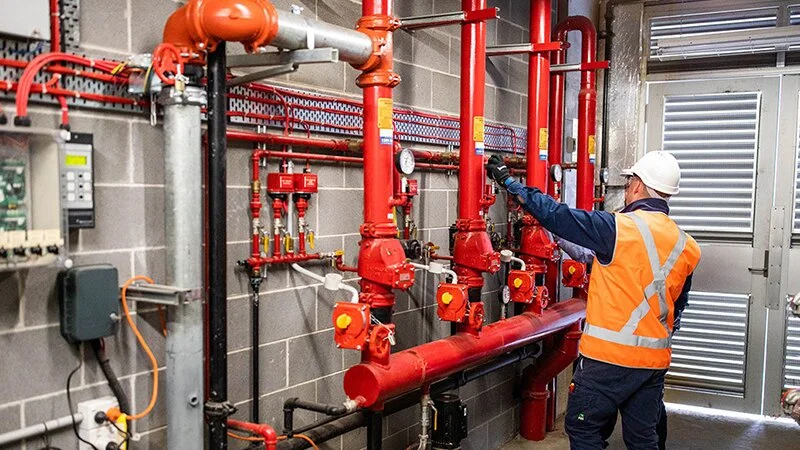
Fire safety in England is governed by several important laws designed to protect occupants and buildings from fire hazards.
Regulatory Reform (Fire Safety) Order 2005 explained:This is the main fire safety law in England and Wales. It requires the Responsible Person to identify fire risks and implement appropriate safety measures.
Duties of the Responsible Person in managing fire risk:The Responsible Person must maintain fire precautions, keep escape routes clear and regularly review fire risks.
Fire Safety Act 2021 and Fire Safety (England) Regulations 2022:These regulations clarified responsibilities relating to external walls, flat entrance doors and communal areas in residential buildings.
Building Safety Act 2022 and its implications for residential buildings:This legislation strengthens oversight of higher-risk residential buildings and increases accountability for building owners and managers.
Why competent fire risk assessors are important for compliance:Because fire safety legislation can be complex, assessments should be carried out by trained professionals.
At Safety Spectrum London, our fire risk assessments are carried out in accordance with current UK fire safety legislation and recognised industry standards. Our team holds professional training and certifications including NEBOSH Fire Safety qualifications, IFSM recognised training, UK Fire Door Training and BM TRADA standards, ensuring assessments are conducted professionally and in line with recognised fire safety guidance.
Fire risk assessments are not only required when a building is first occupied. They should also be reviewed whenever circumstances change.
Fire safety compliance for landlords and letting agents:Often required before renting or letting a property.
Assessments required for HMO licensing:Local authorities may require fire risk assessments for HMO licensing.
Fire risk assessments for commercial premises and workplaces:Businesses must ensure safe working environments.
Compliance requirements for managing agents and residential blocks:Managing agents often coordinate assessments for communal areas.
Assessments required by insurers, solicitors or property transactions:Insurance providers or solicitors may request evidence of fire safety compliance.
When a fire risk assessment should be reviewed or updated:Assessments should be reviewed regularly or whenever building use changes.
During inspections, certain fire safety issues appear frequently.
Fire doors that do not meet safety standards:Damaged seals, incorrect gaps or missing components can reduce effectiveness.
Blocked or unsafe escape routes:Escape routes must remain clear to allow safe evacuation.
Inadequate fire detection and alarm systems:Buildings must have suitable fire alarm systems.
Missing or insufficient emergency lighting:Emergency lighting helps occupants exit safely during power failures.
Lack of fire safety signage:Clear signage helps occupants identify escape routes quickly.
Combustible storage and housekeeping concerns:Improper storage of flammable materials increases fire risk.
Poor fire compartmentation:Gaps in compartmentation allow fire to spread more quickly.
Our fire risk assessments provide a clear and practical report to help responsible persons understand fire risks and maintain compliance.
Summary of key findings:An overview of the main fire safety observations.
Identification of fire hazards:Details of potential fire risks identified during inspection.
Photographic evidence:Photos may be included to highlight safety issues.
Prioritised recommendations:Clear actions listed according to risk level.
Ongoing fire safety guidance:Advice on maintaining fire safety measures.
Identifying issues is a normal outcome of a fire risk assessment.
Understanding risk levels and prioritising actions:Recommendations are prioritised based on risk level.
Management improvements and operational controls:Some improvements involve better procedures rather than structural changes.
Repairs and fire safety remedial works:Certain issues may require repairs such as fire door adjustments, alarm upgrades or emergency lighting installation. Our team can also carry out the recommended fire safety remedial works, helping property owners bring buildings back into compliance.
Planning and implementing improvements:Responsible persons can plan improvements within a practical timeframe.
Ongoing monitoring and review:Fire safety management should be reviewed regularly.
Fire risk assessments vary depending on the building and its risks.
Type 1 fire risk assessment:Inspection of communal areas without destructive inspection.
Type 2 fire risk assessment:Includes limited destructive inspection.
Type 3 fire risk assessment:Inspection of communal areas and sample flats.
Type 4 fire risk assessment:Full structural inspection including destructive investigation.

At Safety Spectrum London, we deliver all types of Fire Safety testing and certification your one trusted team for complete electrical safety compliance.
Professional fire door supply and installation for residential and commercial properties. Fully compliant fittings ensuring maximum fire protection and safety standards.
Certified inspections of existing fire doors to verify safety, integrity, and compliance. Receive a full fire door certification report meeting current UK fire regulations.
We design, install, and commission fully compliant fire alarm systems in line with BS 5839 standards, ensuring early detection, reliable performance, and complete legal compliance.
Annual servicing, maintenance, and supply of fire extinguishers for all property types. Ensures full compliance with BS standards and keeps your premises safe and protected.
Complete fire safety assessments for landlords, businesses, and commercial premises. Ensures your property meets all mandatory fire safety regulations with certified reporting.
To provide an accurate quotation we usually require:
Sometimes fire risk assessments are required urgently.
Property sales or purchases:Solicitors may request assessments during transactions.
Insurance compliance requests:Insurers may require updated documentation.
Landlord or managing agent deadlines:Compliance deadlines may require urgent assessments.
After building alterations or incidents:Changes to the building may require a review of fire safety measures.
Fire risk assessment costs depend on several factors.
Building complexity and risk level:Larger or more complex buildings require more detailed inspections.
Building size and layout:The number of floors and property layout influence the assessment scope.
Commercial or residential use:Different property uses affect the inspection process.
Access and urgency:Urgent inspections or restricted access may affect scheduling.
All tests performed comply with written RAMS (Risk Assessment And Method Statement) for total HSE compliance.
You can book an appointment over the phone or online. Same-day and weekend appointments are available across London.
Our experienced assessor visits your property to carry out a full survey in accordance with PAS 79.
You receive a professional report and Fire Risk Assessment Certificate within 24 hours.
We explain our findings, suggest corrective actions, and can quote instantly for remedial work.
It should be reviewed every 12 months, or earlier if the building layout changes, new occupants move in, or a fire incident occurs.
Consequences of Non-Compliance
What can happen if you don’t comply with Fire Safety Regulations?

If your report finds deficiencies or instances of non-compliance, we can offer remedies on the spot:
This one-stop shop solution assists landlords and property managers in achieving full compliance easily without hiring multiple contractors.
Keep your business safe, compliant, and fully certified.
A fire risk assessment is a planned look at a building to find possible fire hazards, rate the level of risk, and suggest ways to make it safer. It helps property owners and other responsible people make sure that the building meets fire safety standards and that people can get out safely in an emergency.
Yes. The Regulatory Reform (Fire Safety) Order 2005 says that most businesses in England and Wales must have a responsible person do a proper fire risk assessment.
It is the job of the Responsible Person to make sure that a fire risk assessment is done. The landlord, employer, business owner, managing agent, or building owner usually has this power, depending on who runs the property.
If the Responsible Person knows enough, they can technically do a fire risk assessment. Most property owners, on the other hand, hire qualified fire risk assessors who have received professional training and have worked in fire safety.
Yes. Landlords must make sure that fire risks are properly assessed in buildings with shared spaces, HMOs, blocks of flats, and rental properties where fire safety rules apply.
Fire risk assessments are usually needed for shared spaces in apartment buildings, such as stairwells, hallways and shared entrances. Usually, individual flats are not checked unless they are part of a certain type of inspection.
The price of a fire risk assessment changes based on things like the size, shape, number of floors, and overall complexity of the building. Smaller buildings may cost less, but bigger commercial buildings need more thorough inspections.
The duration of a fire risk assessment depends on the size and complexity of the property. Smaller premises may take around 1 to 2 hours, while larger buildings or complex sites may require several hours.
You should look over fire risk assessments on a regular basis and make changes to them whenever there are big changes to the building, its occupancy, or its fire safety plans. Many companies check them every year to make sure they are still following the rules.
A fire risk assessment's goal is to keep people safe and stop fires by finding dangers and making sure the right fire safety measures are in place.
The most common type of inspection for residential blocks is a Type 1 fire risk assessment. It looks at shared spaces like hallways and stairwells, but it doesn't involve destructive inspection.
To get a fire risk assessment, you need to get in touch with a qualified fire risk assessor. They will look over the details of your property, set up a site visit, and send you a report with their recommendations.


© 2025 Safety Spectrum London – All Rights Reserved. Company Reg No.16678881
Live Chat