
You are not the only one whose Electrical Installation Condition Report came back as unsatisfactory. Every year, a lot of landlords and property owners in London have to deal with this. The failure itself is not the important thing. What you do next is important.
Electrical remedial works are the repairs that need to be made to an installation to make it safe and up to code again. We help landlords, managing agents, homeowners, and businesses in London get from a failed EICR to an electrical system that is safe and meets the law without any confusion or extra costs.
We have a clear goal. Find out what needs to be fixed, do the work correctly, check it, and give you the right paperwork so you can show that you are following the rules with confidence.
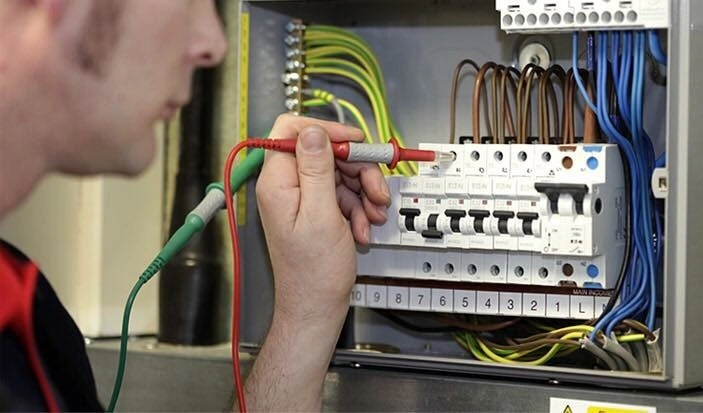
What “Remedial Works” Means After an Unsatisfactory EICR
When the inspector finds problems that could be dangerous or are already dangerous, the EICR is no longer valid. They are usually given the codes C1, C2, or FI. Remedial works are the exact repairs that need to be made to fix those problems.
This could mean fixing earthing problems, replacing a broken socket, or upgrading a consumer unit. It’s not about making the property look better. It’s about making the installation safer and making sure it meets current standards.
Electrical problems are not just ideas. The UK Home Office says that thousands of house fires each year are caused by electrical problems. Common causes include loose connections, circuits that are too full, and bad protection.
If you wait too long to fix C1 or C2, you could put tenants and other people at risk of electric shock or fire. The Electrical Safety Standards in the Private Rented Sector Regulations also make it illegal for landlords to not keep their electrical systems safe. If you don’t do anything, you could face enforcement action and fines.
Insurance is another thing to think about. If a known problem isn’t fixed and later causes damage, insurers may wonder if reasonable steps were taken.
Usually, the person who controls the electrical installation is responsible.
The landlord is usually the one who does this for rental properties. The landlord is still legally responsible, even though managing agents may organise work. Under health and safety law, the person in charge of a business must make sure that the installation is safe.
If you’re not sure who is responsible, it’s always better to ask early than to assume that someone else will take care of it.
There were no C1, C2, or FI codes found in a satisfactory EICR. There may still be C3 suggestions for the installation, but these are improvements, not safety problems.
If the result is not satisfactory, it means that there are problems that need to be fixed. Once the necessary repairs are finished and checked, compliance can be shown by getting the right certification.
These codes often cause confusion. In simple terms:
Understanding the difference prevents unnecessary spending and helps prioritise correctly.
To fix an unsatisfactory outcome, only C1 and C2 defects need to be fixed. If FI items show a defect, they must be looked into and fixed.
You don’t have to have C3 items. They often have to do with safety improvements that aren’t required by law to be compliant. We always make it clear which works are required and which are optional so you can make smart choices.
If an EICR is not up to par for a private rented property in England, the repairs should usually be done within 28 days, or sooner if the report says so.
This means you need to act quickly in real life. If you book a survey quickly and confirm the scope of work early, you won’t have to deal with last-minute stress and problems getting into the property with tenants.
Older fuse boards often don’t have modern residual current device protection. This protection is very important for lowering the chance of getting shocked.
One of the most common things to do to fix a problem is to upgrade a consumer unit, especially in homes with old equipment or not enough circuit protection.
Correct earthing and bonding make sure that fault currents are safely sent to ground. C2 is often used to mark missing or too-small bonding conductors.
We check for continuity, make sure connections to gas and water services are working, and upgrade conductors when necessary.
C1 or C2 codes are often used for damaged accessories, loose faceplates, signs of overheating, or live parts that are exposed.
These repairs are usually simple, but they need to be done and tested correctly to make sure they are safe.
Overheating can happen if the terminations inside consumer units or junction boxes are not tight enough. The property owner may not always be able to see these problems, but they are common during testing.
We separate the parts, check them, re-terminate them, or replace them as needed, and then we do verification testing.
Some properties, especially older ones, may have wiring that is broken or no longer safe. This doesn’t always mean that a full rewire is needed.
We carefully look at the situation and only suggest partial rewiring when it is absolutely necessary.
FI codes mean that something is not clear. For instance, test results might point to a possible problem that needs more investigation.
Before we suggest any repairs, we do targeted fault finding to find the root cause. This saves you time and effort and helps you understand.
First, we’ll look over your EICR in detail. Some reports are easier to understand than others. We figure out which things are important and which ones need to be looked into.
This stage of triage helps keep people from overreacting and makes sure that urgent risks are dealt with first.
Sometimes the report doesn’t have enough information on its own to give an accurate price. In these situations, we do a site survey.
We check to see if we can get to the site, make sure the circuit layouts are correct, and decide if the suggested work is practical. This keeps costs from coming up later.
All repair work is done according to the rules set out in BS 7671. We use materials that meet standards and follow the right steps for isolation, testing, and verification.
The safety of the workers is just as important as the final product.
We test the circuits that were broken again after they have been fixed to make sure the problem has been fixed. This could mean testing the insulation resistance, the earth fault loop impedance, and the RCD.
You have to verify. This is the only way to be sure that the installation is safe.
When the work is done, we give you the right certificate and a clear summary of what has been done.
You will know exactly what problems have been fixed and how compliance has been restored.
A Minor Electrical Installation Works Certificate is usually given for small changes or repairs. An Electrical Installation Certificate is given for bigger changes, like replacing a consumer unit.
We explain which certificate applies and why.
Building Regulations Part P says that some home repairs must be reported. We send notifications through our registration body when necessary so that you get the right confirmation.
Landlords must show tenants proof of any repairs they make, and if asked, they must also show this to local authorities.
We make sure you get paperwork that clearly shows how the repairs are related to the original EICR observations.
After the repairs are done, landlords usually have to send tenants a written confirmation and any necessary certification within a certain amount of time.
We tell you what to issue and help you keep track of your compliance.
We know that getting in is often the hardest part. Tenants need to be given enough time to prepare, and appointments need to be realistic.
We give people structured time slots and make sure they understand each other to cut down on missed visits.
Planned power outages are kept to a minimum when possible. We keep our work areas clean and respect other people’s space.
We want to do the repairs that need to be done without causing any trouble.
Clear updates are important to managing agents. We confirm appointments, give updates on progress when necessary, and answer questions quickly.
For bigger portfolios or blocks of flats, we can plan the work in phases that make sense to keep everyone safe and cause the least amount of trouble for all units.
The costs depend on the type of defects, how many circuits are involved, how well the installation is already done, and any access problems.
Fixing a loose connection is not the same as upgrading a whole consumer unit. Clear scope leads to correct pricing.
Sometimes, a detailed EICR has enough information to give a rough idea of the costs. In some cases, especially when FI codes are involved, a visit to the site is needed.
We are open about this. No one benefits from guessing.
C1 defects are given the most attention. If there is an immediate threat, we recommend isolating the person and sending someone right away.
Our quotes clearly show what is included. We don’t combine optional C3 upgrades with required work.
You still have the final say.
We don’t take shortcuts; we focus on safety and following the rules. Future inspections must be able to see the remedial work.
We explain where improvements can make things safer, but we also make it clear when they aren’t legally required.
Stress goes down when people talk to each other clearly. You will know what is going on and why from the first question to the last certification.
We know how hard it is to meet deadlines, talk to tenants, and deal with government scrutiny in London.
We offer professional EICR testing for offices and commercial sites, ensuring your business stays fully compliant with minimal disruption.
We deliver quick, accurate electrical fault-finding to identify issues early and prevent costly repairs or system failures.
We provide fast, certified electrical inspections for homes and rentals, ensuring complete safety and compliance at competitive rates.
We provide modern, compliant fuse box upgrades that enhance safety, reduce tripping, and meet all 18th-Edition regulations.
We provide fast, efficient PAT testing with instant digital reports to keep your appliances, staff, and tenants fully protected.
Yes. We can look over another contractor's report and do the necessary work, but we need to make sure that the scope is correct through paperwork or a survey.
Sometimes. We might give you an estimate if the report is clear and detailed. A survey may be needed if there isn't enough information.
No. C3 items are suggestions. They don't make the report bad.
A Minor Works Certificate or an Electrical Installation Certificate is usually used to prove that remedial work has been done. In some situations, you only need a full new EICR.
This depends on how big the job is. It could take a few hours to fix small things. It might take a whole day or more to do bigger upgrades.
As a landlord, you may be breaking the law. There is also a greater risk to safety.
Yes, most of the time. There may be short power outages, but full vacancy is not usually needed.
More research is needed. Before we suggest a fix, we will test and find the exact problem.


© 2025 Safety Spectrum London – All Rights Reserved. Company Reg No.16678881
Live Chat