
At Safety Spectrum London, we provide Commercial Fire Risk Assessments across London for offices, shops, restaurants, warehouses, and other business premises. Our assessments are meant to help employers and other people in charge figure out what they need to do to keep their workplaces safe and follow UK fire safety laws.
Our goal is simple: find real risks in your workplace and give you useful tips on how to make it safer and follow the rules.
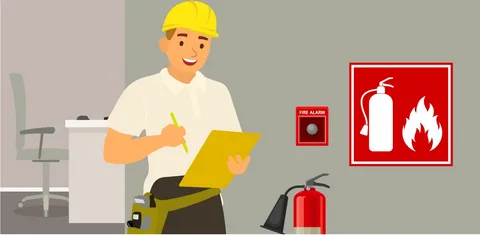
Every commercial building presents different fire risks depending on its layout, occupancy, and operations. Our assessments are tailored to the specific activities taking place inside the premises.
There are often a lot of people working in office buildings, as well as electrical equipment and shared escape routes. Our evaluations look at the layouts of workplaces to make sure that workers can get out safely in case of a fire.
Typical areas assessed include:
Up to 3 Floors (Communal Area)
£119
3–5 Floors (Communal Area)
£239
5–10 Floors (Communal Area)
£299
(Whole Building)
On Call
For homes, apartments, and buildings with shared spaces. We check the lighting, alarms, fire doors, escape routes and shared spaces.
For HMOs that have a licence and those that don't. We make sure that we follow the rules set by the local government and our licenses.
For blocks that were built for a specific purpose or changed. We look at stairwells, hallways, communal areas, and fire separation.
Customers in stores may not be familiar with how the building is laid out. It is important to have clear evacuation routes and signs that are easy to see.
We assess:
Cooking areas add more fire risks, like cooking tools, heat sources, and grease buildup.
Our assessments consider:
There are often machines, flammable materials, or a lot of fuel in industrial buildings.
Assessments focus on:
We work with a wide range of commercial duty holders, including:
Our role is to help the Responsible Person understand and manage fire safety risks within their workplace.
A commercial fire risk assessment examines how a fire could start, how it might spread, and whether the building’s safety measures are sufficient.
There are usually three types of fire hazards: things that can start a fire, things that can burn, and oxygen.
Common workplace hazards may include:
Electrical equipment and appliances, Heating systems, Cooking equipment, Flammable materials or storage, Waste and packaging materials
Identifying these hazards helps reduce the likelihood of a fire starting.
All commercial buildings must allow occupants to evacuate quickly in an emergency.
We review:
Escape routes and corridors, Emergency exits, Staircases and protected routes, Travel distances to exits
Early detection is essential in commercial buildings where staff and visitors may be present.
Our assessment reviews:
Fire alarm systems, Smoke detection coverage, Manual call points, Alarm audibility within the premises
In a fire emergency, lighting and signage help guide occupants to safety.
We assess:
Emergency lighting along escape routes, Exit signage visibility, Directional safety signs
Fire doors help prevent smoke and flames spreading through a building.
During the assessment we review:
Fire door condition and operation, Self-closing mechanisms, Door gaps and seals, Fire-resistant partitions
Workplace fire safety must account for how many people are present and how they use the building.
We review:
Staff occupancy levels, Visitor numbers, Working patterns and shift schedules, Vulnerable occupants
Equipment alone does not ensure safety. Proper management and procedures are also essential.
We review:
Fire safety training for staff, Emergency procedures, Maintenance records, Fire alarm and emergency lighting testing
A Commercial Fire Risk Assessment is not only a legal requirement, but also an important step in protecting people and businesses from fire hazards.
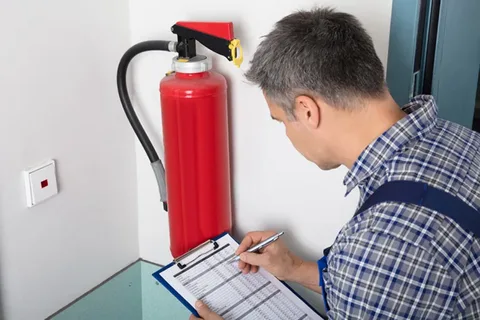
Commercial fire risk assessments are required for many types of business premises.
Commercial fire safety in England is governed by several important laws.
Businesses must do fire risk assessments and take the right steps to protect themselves from fires under this law.
The Responsible Person must:
As part of their fire safety management, businesses must write down the results of the assessment and keep records of them.
Reviews should be carried out when:
When we do commercial fire risk assessments, we often find common fire safety problems in businesses. Taking care of these risks early on makes things safer and lowers the chances of fires happening.
Things that are left in hallways or escape routes can block the way out and make it take longer for people to leave the building safely in an emergency.
Common causes of fires in commercial buildings are broken electrical systems, damaged wiring, or too much equipment.
To keep fire and smoke from spreading through the building, fire doors must close properly and stay in good shape.
If there aren’t enough signs or emergency lights, it can be hard for people to find their way out in an emergency.
To make sure everyone can leave the building safely, workers should know how to respond to fire alarms and follow evacuation procedures.
All tests performed comply with written RAMS (Risk Assessment And Method Statement) for total HSE compliance.
You can book an appointment over the phone or online. Same-day and weekend appointments are available across London.
Our experienced assessor visits your property to carry out a full survey in accordance with PAS 79.
You receive a professional report and Fire Risk Assessment Certificate within 24 hours.
We explain our findings, suggest corrective actions, and can quote instantly for remedial work.
Our Commercial Fire Risk Assessment gives you a clear picture of how well your building is set up for fire safety. You will get a full report with the results and suggestions after the site visit.
Detailed Fire Risk Assessment Report: You will get a full Fire Risk Assessment report that goes over the fire safety measures already in place in your building and points out any possible risks.
Prioritised Action Plan:The report has a list of actions in order of importance, which helps businesses deal with the most important fire safety issues first.
Practical Fire Safety Recommendations:There are clear suggestions for how to make fire safety better and lower the risk of fires happening on the property.
Documentation for Compliance Records:You can keep the Fire Risk Assessment report as part of your official fire safety and compliance paperwork. This will help show that you are following UK fire safety rules.
At Safety Spectrum London, we deliver all types of Fire Safety testing and certification your one trusted team for complete electrical safety compliance.
Professional fire door supply and installation for residential and commercial properties. Fully compliant fittings ensuring maximum fire protection and safety standards.
Certified inspections of existing fire doors to verify safety, integrity, and compliance. Receive a full fire door certification report meeting current UK fire regulations.
We design, install, and commission fully compliant fire alarm systems in line with BS 5839 standards, ensuring early detection, reliable performance, and complete legal compliance.
Annual servicing, maintenance, and supply of fire extinguishers for all property types. Ensures full compliance with BS standards and keeps your premises safe and protected.
Complete fire safety assessments for landlords, businesses, and commercial premises. Ensures your property meets all mandatory fire safety regulations with certified reporting.
Choosing a qualified fire risk assessor is essential for reliable and compliant assessments.
Experienced Commercial Fire Risk Assessors:Our assessors have 6+ years of experience carrying out fire risk assessments for offices, shops, restaurants, warehouses and other commercial premises.
Fully Accredited Professionals:We are a fully licensed fire safety service provider, which means that all of our assessments meet UK fire safety standards and rules.
We write our reports in plain, simple language and include a prioritised action plan so that businesses can easily understand and follow our advice.
Support for Businesses Across London:We provide Commercial Fire Risk Assessment services throughout London to help businesses in a wide range of fields and sectors.
Professional and Transparent Service:Our main goal is to give businesses professional and trustworthy service that helps them stay within the law, manage risks, and improve fire safety.
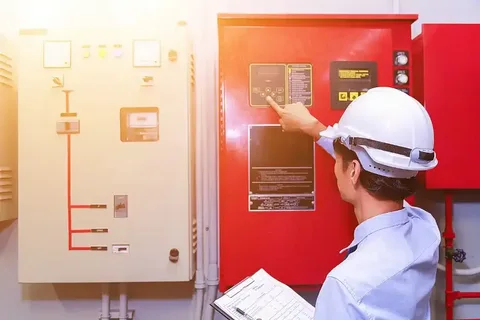
We provide Commercial Fire Risk Assessment services across London, supporting businesses in a wide range of sectors and property types.
If you own a business in London, getting a Commercial Fire Risk Assessment is an important step in keeping your employees, customers, and property safe.
Yes. The Regulatory Reform (Fire Safety) Order 2005 says that businesses must do a fire risk assessment.
The Responsible Person is usually the employer, building owner, or business owner.
It is the job of the Responsible Person to make sure that a fire risk assessment is done. The landlord, employer, business owner, managing agent, or building owner usually has this power, depending on who runs the property.
If the Responsible Person knows enough, they can technically do a fire risk assessment. Most property owners, on the other hand, hire qualified fire risk assessors who have received professional training and have worked in fire safety.
Yes. Landlords must make sure that fire risks are properly assessed in buildings with shared spaces, HMOs, blocks of flats, and rental properties where fire safety rules apply.
Fire risk assessments are usually needed for shared spaces in apartment buildings, such as stairwells, hallways and shared entrances. Usually, individual flats are not checked unless they are part of a certain type of inspection.
The price of a fire risk assessment changes based on things like the size, shape, number of floors, and overall complexity of the building. Smaller buildings may cost less, but bigger commercial buildings need more thorough inspections.
The duration of a fire risk assessment depends on the size and complexity of the property. Smaller premises may take around 1 to 2 hours, while larger buildings or complex sites may require several hours.
The duration depends on the size and complexity of the premises.
Reviews should happen every so often or when big changes happen.


© 2025 Safety Spectrum London – All Rights Reserved. Company Reg No.16678881
Live Chat